Staff profile

| Affiliation |
|---|
| Assistant Professor (Research) in the Department of Geography |
Biography
Jonathon is a more-than-human geographer from Newcastle upon Tyne with a broad interest in the geographies of nature. His research examines how environmental knowledges are produced and contested across diverse geographical contexts from the Chornobyl Exclusion Zone in Ukraine to the rumen of livestock cattle in Europe and India. He lives between Newcastle in the UK and Vinnytsia in Ukraine.
Джонатон Торнбулл — географ з Ньюкасла-апон-Тайну. Він працює в полі географії довкілля та "більш-ніж-людської" географії. Його дослідження зосереджене на тому, як довкіллєві знання формуються та підважуються в різних географічних контекстах — від Чорнобильської зони відчуження в Україні до рубця свійської худоби в Європі та Індії. Він живе між Ньюкаслом у Великій Британії та Вінницею в Україні.
Jonny is an Assistant Professor of Human Geography at Durham where he currently holds a three-year British Academy Postdoctoral Fellowship (2025-2028) for his project, ‘Nightlife in the More-than-human City’. He is also an Honorary Fellow at the Leverhulme Centre for Nature Recovery at the University of Oxford.
Prior to joining Durham in September 2025, Jonny held a Junior Research Fellowship in Human Geography at Jesus College, Oxford and was a postdoctoral researcher at the Leverhulme Centre for Nature Recovery. Funded by the ESRC, he received his PhD in Geography from King’s College, Cambridge under the supervision of Professor Matthew Gandy and Professor Bill Adams, during which he was a visiting researcher: at the National University of Kyiv-Mohyla Academy in Kyiv, Ukraine from 2019-2022; and at Wageningen University in the Netherlands between March and July 2022. He holds an MSc in Nature, Society, and Environmental Governance from Christ Church College, Oxford, and a BA in Geography from Jesus College, Oxford. Jonny attended Kenton School, Newcastle’s largest comprehensive state-funded high school.
With Dr Liam Saddington, he is Co-Editor-in-Chief of Routes: The Journal For Student Geographers. Together, they are interested in widening participation in academic geography by engaging high school and undergraduate geographers in the publication process. Jonny is also an Editorial Associate of Environmental Humanities and sits on the committee of the RGS Animal Geographies Working Group.
Research
Jonny’s research examines how powerful ideas concerning Nature shape the ways human-environment relations are governed. He is interested in the relationship between hegemonic and vernacular forms of expertise, and in who gets to speak with authority regarding Nature. His research is interdisciplinary, bridging conceptual and methodological approaches from the social sciences, humanities, and ecological science. He is interested in experimental, creative, and participatory methods for studying wildlife.
Coalescing around the themes of nature, ecology, and technology, there are several key lines of enquiry that Jonny’s research has pursued to date:
I. Nightlife in the More-than-human City
Jonny’s current research explores the urban nightscape; a distinct but understudied spacetime whose ecological importance is increasingly recognised at the same time as it is made vulnerable to anthropogenic pollution and climate change.
He is collaborating with ecologists, citizen scientists, and urban rewilding organisations to develop experimental multi-sensory, multi-species, and participatory methods for studying the ‘everynight lives’ of three nocturnal urban species: cats in London; raccoons in Berlin; and hedgehogs in Newcastle.
The project draws together approaches from animals’ geographies, sensory ecology, and natural history to develop a more temporally holistic approach to urban ecologies research. It aims to amplify emerging voices in urban nature conservation who are calling for us to ‘rewild the night’.
This work is funded by a British Academy Postdoctoral Fellowship.
II. Rewilding The City
In collaboration with Dr Tom Fry and Professor Jamie Lorimer, Jonny has traced the emergence of ‘urban rewilding’ as a new form of urban nature conservation with distinct practices, politics, and publics. Rewilding The City investigates the role of cities in nature recovery, bringing together contemporary literatures in political economy, more-than-human geography, and urban ecologies.
Empirical work has focused on: beaver reintroductions in the UK (London) and Germany (Berlin and Munich); the proliferation (and political ecology) of wildflower meadows in UK cities; urban fragmentation and connectivity; and the changing natures of the greenbelt in the UK. With Dr Lauren Van Patter, Jonny is exploring the rehabilitation of urban wildlife in Toronto as part of urban rewilding.
This work is funded by the Leverhulme Trust, via the Leverhulme Centre for Nature Recovery and an Insight Development Grant from the Social Sciences and Humanities Research Council of Canada.
Key publications:
- Turnbull, J., Fry, T. and Lorimer, J. accepted (2026). Beavers in Paradise: Prefiguring London’s urban wilds. Environment and Planning E: Nature and Space.
- Turnbull, J., Fry, T. and Lorimer, J. 2025. (Re)wilding London: Fabric, politics, and aesthetics. Transactions of the Institute of British Geographers, 50(3): e12748.
III. Nuclear Natures
Jonny’s PhD explored the ‘return of nature’ to the Chornobyl Exclusion Zone in Ukraine, the site of the world's worst nuclear catastrophe of 1986. This work is currently being prepared for publication as a monograph, provisionally titled Radioactive Resurgence, which explores how the Zone has come to be understood simultaneously as a post-apocalyptic wasteland and a thriving nuclear nature reserve, and how more-than-human life endures after nuclear catastrophe.
Джонатон захистив кандидатську дисертацію про «повернення природи» до Чорнобильської зони відчуження в Україні — місця наймасштабнішої у світі ядерної катастрофи 1986 року. Ця робота буде надрукована у вигляді монографії з попередньою назвою Radioactive Resurgence. Книга ґрунтуватиметься на осмисленні Зони як постапокаліптичної пустки і, водночас, квітучого ядерного природного заповідника. Вона також досліджуватиме те, як більш-ніж-людське життя триває після ядерної катастрофи.
Over three years of multispecies ethnographic fieldwork, Jonny accompanied scientists studying the Zone’s ecologies—from wolves to radiotrophic fungi—and participated in an NGO’s campaign to care for the dogs of Chornobyl. Participatory photography was employed as a key ethnographic method.
Протягом трьох років етнографічної польової роботи Джонні супроводжував науковців, які досліджували екології Зони —від вовків до радіотрофних грибів — а також долучався до роботи громадської організації, що опікувалася чорнобильськими собаками. Ключовим етнографічним методом стала партисипативна фотографія.
With a Ukrainian film crew, Jonny is producing a film on the dogs living in the Zone called Собаки Що Вижили (The Dogs That Survived). The film and exhibition were shown at The Cambridge Festival in 2023 and have been screened at Harvard and Princeton. Jonny has also collaborated with the ceramicist Thomas Hedley to represent nuclear natures in ceramic form.
Key publications:
- Turnbull, J. 2025. Making sense of nuclear natures: Ecologies, Expertise, Aesthetics. Progress in Environmental Geography, 4(4): 436-464.
- Turnbull, J. 2025. Chornobyl-as-laboratory? The curious case of CTVT. East/West: Journal of Ukrainian Studies.
- Turnbull, J. 2020. Checkpoint dogs: Photovoicing canine companionship in the Chernobyl Exclusion Zone. Anthropology Today, 36(6): 21-24.
This work was funded by UKRI’s Economic and Social Research Council (ESRC).
IV. Digital Ecologies
This research strand examines how developments in science and technology are transforming human-nature relations via three thematic lenses—materialities, encounters, and governance—and across diverse case studies. It develops a framework for understanding how digital mediation is becoming increasingly inseparable from how nature is made sense of in the ‘technonatural present’.
In 2020, with Dr Adam Searle and Dr Henry Anderson-Elliott, Jonny co-founded Digital Ecologies, an interdisciplinary and international research group seeking to foster critical conversations at the interface of more-than-human and digital geographies, political ecology, and new media studies. Their current project—AI Ecologies—explores how Artificial Intelligence is transforming human–nature relations. Three sub-questions guide this work: How is humanism being reconfigured as AI challenges human exceptionalism? How does AI reshape environmental knowledge production? And what new resource politics emerge as AI infrastructures proliferate?
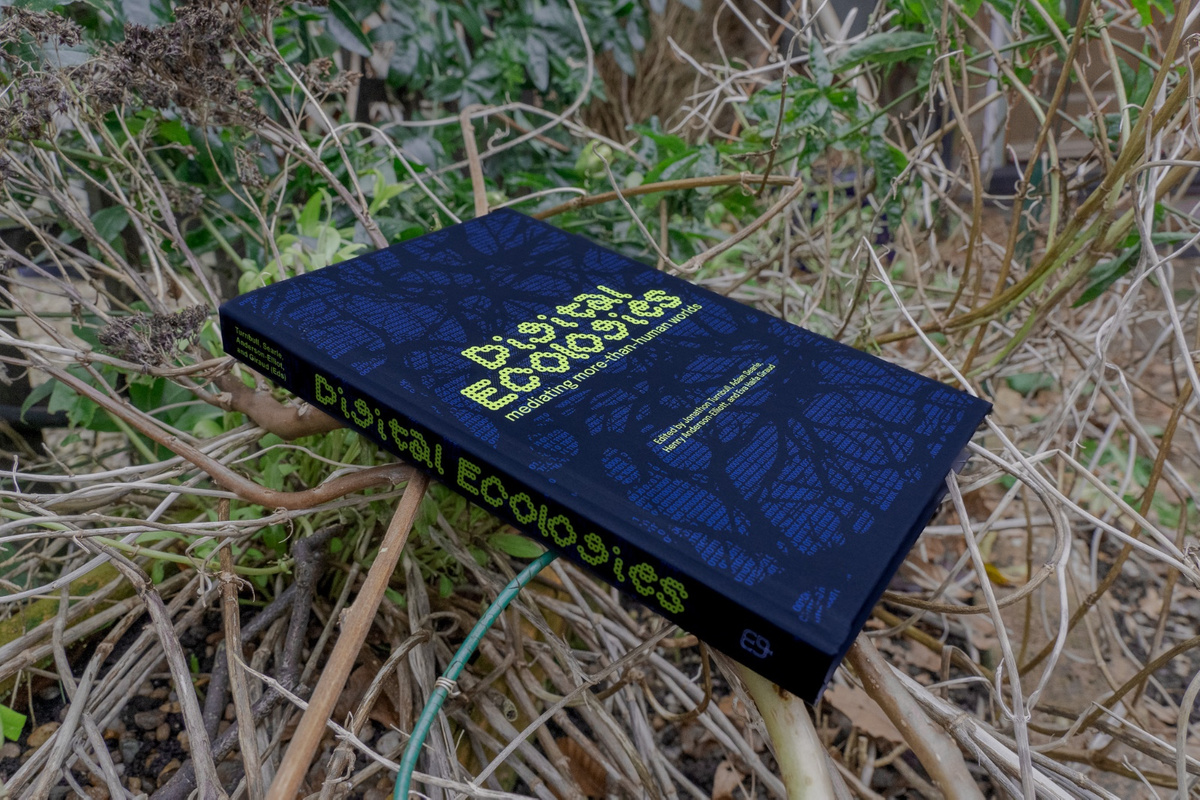
Following their inaugural annual conference in 2021, Digital Ecologies published their first book—Digital Ecologies: Mediating More-than-human Worlds—with Manchester University Press in 2024. Digital Ecologies in Practice was held in Bonn, Germany in 2022, and the proceeds were published as a special issue of cultural geographies in practice. In 2024, the Digital Dimensions of Nature Recovery brought together practitioners and policy makers, with the proceeds forthcoming as a special issue of People and Nature. Co-organised with Professor Gillian Rose, their 2026 annual conference explored the Visual Politics of Digital Ecologies and the proceeds are under preparation as an (un)edited collection with Cultural Geography (Un)limited Editions.
With Adam Searle, Jonny is currently thinking about how digital technologies like VR/AR are being used to fabulate animals’ umwelten in different contexts, most recently through field work in Breda, The Netherlands at the studio of the Dutch design Collective, Polymorf.
Key publications:
- Turnbull, J., Searle, A., Anderson-Elliot, h. and Giraud, E. (Eds.) 2024. Digital Ecologies: Mediating More-Than-Human Worlds. Manchester: Manchester University Press.
- Turnbull, J., Searle, A., Hartman Davies, O., Dodsworth, J., Chasseray-Peraldi, P., Von Essen, E. and Anderson-Elliott, H. 2022. Digital ecologies: Materialities, encounters, governance. Progress in Environmental Geography, 2(1-2): 3-32.
- Searle, A., Turnbull, J. and Adams, W.M. 2023. The digital peregrine: a technonatural history of a cosmopolitan raptor. Transactions of the Institute of British Geographers, 48(1): 195-212.
- Turnbull, J., Searle, A. and Lorimer, J. 2023. Anthropause environmentalisms: Noticing natureswith the Self-isolating Bird Club. Transactions of the Institute of British Geographers, 48(2): 232-248.
- Parker, N., Searle, A., and Turnbull, J. 2025. Glitch environmentalism. Environment and Planning E: Nature and Space, 8(5): 1579-1605. https://doi.org/10.1177/25148486251353339.
- Searle, A., Turnbull, J., Hartman Davies, O., Poerting, J., Chasseray-Peraldi, P., Dodsworth, J., Anderson-Elliot, H. (2024) Glitches in the Technonatural Present. Dialogues in Human Geography, 14(2): 342-346.
This project has received funding from: King's College, Cambridge; the Vital Geographies research group at the Department of Geography, Cambridge; the University of Bonn; the German Research Foundation (project number 446600467); the European Research Council (grant number 949577); the Olso School of Environmental Humanities; the Technological Life research cluster at the School of Geography and the Environment, Oxford; Wageningen University; the Leverhulme Centre for Nature Recovery; the Cheng Kar Shun Digital Hub at Jesus College, Oxford; the Harding Fund at Hertford College, Oxford; St. John’s College, Oxford; and the University of Nottingham.
V. Ukrainian Environmental Humanities
Jonny's research contributes to the emerging field of the Ukrainian Environmental Humanities, which brings environmental humanities scholarship into conversation with Ukrainian studies.
In 2022, he co-founded the Ukrainian Environmental Humanities Network with a group of early career researchers, designers, artists, and curators from Ukraine: Karolina Uskakovych, Dmytro Chepurnyi, Oleksandra Pogrebnyak, and Ewa Sułek. The interdisciplinary network explores decolonial approaches to Ukraine’s environmental issues. The inaugural seminar series ran online over the summer in 2023.
In winter 2023, the network curated the online residency "Grounding. Invasion" in collaboration with IZOLYATSIA and with support from the Stabilisation Fund for Culture and Education of the German Federal Foreign Office and the Goethe-Institut. In winter 2024, they curated Ukrainian Ecologies, which was exhibited in Kyiv. These residencies and public programmes examine the impacts of Russia's war on Ukrainian environments and communities. In collaboration with Soлomiya Magazine, the network published the environmental issue of Soлomiya in 2025, which—through art, photography, and writing—explores Ukrainian landscapes and ecologies. The UEHN is currently collaborating with Subjective Editions to produce The Subjective Atlas of Ukraine, a counter-cartographic atlas of Ukraine.
Between July and August 2022, Jonny undertook a writing residency with Ukraine Lab, funded by the Ukrainian Institute, the British Council, and PEN Ukraine. His piece on the Kyiv thickets is published in The Ecologist (in English) and Українська Правда (in Ukrainian).
Key publications:
- Turnbull, J. 2025. Chornobyl-as-laboratory? The curious case of CTVT. East/West: Journal of Ukrainian Studies.
- Turnbull, J. 2022. The Kyiv Thickets. The Ecologist.
VI. Metabolic Geographies
Metabolism has emerged as a key theme cutting across Jonny’s interests, from Chornobyl’s irradiated ecologies to bovine geographies. With Dr Adam Searle and Dr George Cusworth, Jonny is co-editor of On The Metabolic Governance of Life, which is under contract with Manchester University Press. The book maps alternative genealogies of metabolic thought and explores how metabolic logics now pervade environmental governance.
With Dr Adam Searle, Dr George Cusworth, Dr Else Vogel, Dr François Thoreau, and Dr Catherine Oliver, Jonny has undertaken research on ‘climate cattle’ and post-industrial agriculture in Europe and the US. Examining metabolic experiments in livestock governance targeting methane and nitrogen emissions, they have theorised ‘metabolo-politics’ as an emerging form of environmental biopower that governs material flows and chemical transformations across scales, from the microbiome to the planetary.
Jonny's MSc research examined the metabolic and bovine geographies of India's sacred cows under the supervision of Dr Maan Barua. Drawing on archival and ethnographic research in Delhi, he explored how certain cattle in India come to be understood as ‘surplus’, living (on) waste, in Delhi. This project brings biopolitics and bioeconomy into critical conversation to provincialise lively capital.
As an extension of this work, with Dr George Cusworth Jonny has recently become interested in hormonal geographies.
Key publications:
- Turnbull, J., Cusworth, G., Searle, A., Vogel, E., Thoreau, F. and Oliver, C. accepted, 2025. Metabolo-politics: Bovine metabolism and environmental biopower. Theory, Culture & Society.
- Cusworth, G., Searle, A. and Turnbull, J. forthcoming. On The Metabolic Governance of Life. Manchester: Manchester University Press.
- Searle, A., Turnbull, J. and Oliver, C. (2024) Climate Cattle: Metabolic Intervention in the Good Anthropocene. Environmental Humanities, 16(3): 784–806.
- Turnbull, J. and Barua, M. 2023. Living waste, living on waste: A bioeconomy of urban cows in Delhi. Transactions of the Institute of British Geographers, 48(3): 474–490.
VII. Animals’ Geographies
Animals’ geographies is a key theme running through Jonny’s research, which seeks to diffract geographical concepts by putting the animal subject at the centre of enquiry. Led by Professor Jamie Lorimer and Dr Tim Hodgetts, Jonny is part of a group of more-than-human geographers currently thinking about animals’ territories and animals’ cultures. His broader goal is the development of ‘ecological geography’—a synthesis of ethnographic, ecological, and ethological approaches for studying wildlife.
Key publications:
- Turnbull, J. and Searle, A. 2022. Filmmaking practice and animals’ geographies: attunement,perspective, narration. cultural geographies, 29(3): 453-464.
VIII. Weird Geographies
Provoked by New Weird Fiction as a theoretical resource (notably Jeff VanderMeer and China Miéville), this research strand conceptualises the contemporary socioecological condition as one of ‘global weirding’ and advocates anti-racist approaches to weirding. With Dr Adam Searle and Dr Ben Platt, Jonny outlined the promise of a New Weird Geography and has written on weird Englishness. He has also developed the notion of weird ecologies at Chornobyl. Jonny has a special issue on ‘Weird Geographies’ in press with Cultural Politics edited with Dr Alison Sperling, Dr Ben Platt, and Dr Adam Searle. This research strand has extended to include work on terraforming with Dr Charlotte Wrigley. One day it will involve research on psychedelic geographies.
Key publications:
- Turnbull, J., Platt, B. and Searle, A. 2022. For a new weird geography. Progress in Human Geography, 46(5): 1207-1231.
- Platt, B., Turnbull, J. and Searle, A. forthcoming. Landscape and weirding Englishness. Cultural Politics.
- Turnbull, J. 2021. Weird. Environmental Humanities, 13(1): 275–280.
IX. Geographies of Fascism and Freedom
Since joining Durham, Jonny has become interested in the geographies of fascism and freedom. With Professor Anna Secor, he is launching a new Thematic Group at the Department of Geography to encourage new modes of thinking, researching, and collaborating around pressing global challenges related to the rise of far right, right-wing populist, authoritarian, and autocratic politics. This work builds on a long-term interest in Deleuze and Guattari’s Anti-Oedipus, a text explored in a workshop—Towards an Anti-Oedipal Geography?—Jonny co-organised with Professor Alex Vasudevan in summer 2025.
Public Engagement
Jonny maintains active curatorial and visual practices, including participatory photography and filmmaking. His first film—Собаки Що Вижили // The Dogs That Survived (2025)—documents more-than-human life in the Chornobyl Exclusion Zone in Ukraine after Russian occupation. This work builds on an earlier participatory photography project with Chornobyl checkpoint guards, covered by the BBC. The film has been screened internationally and exhibited at the Cambridge Festival in a mixed-media installation combining photographs, field recordings, and a reconstructed Chornobyl doghouse streaming footage from the Zone.
Jonny has been developing an affirmative style of critical research on urban nature conservation with Dr Tom Fry. As part of this, since 2023, they have collaborated with Citizen Zoo, a London-based NGO leading community-driven urban rewilding initiatives. Citizen Zoo led the UK’s first urban beaver reintroduction in a publicly accessible enclosure in London, a milestone in UK city-based nature recovery. They also work with the non-profit, Stiftung Naturschutz Berlin, a public urban nature conservation organisation. In Newcastle, Jonny has recently started working with Wild Ouseburn, an urban rewilding organisation based in Newcastle’s Ouseburn valley.
With Dr Tom Fry and Dr Caitlin Hafferty, Jonny is currently organising a knowledge-exchange workshop series in spring 2026, connecting his Berlin colleagues with London’s rewilding practitioners. The workshops will focus on practical techniques of urban beaver management and the necessary governance structures for managing coexistence with urban wildlife. These workshops are designed to inform the production of an Urban Beaver Strategy Toolkit for use by municipal authorities interested in reintroducing beavers in the UK and elsewhere. This work is funded by the Agile Initiative at the University of Oxford.
Jonny is involved in numerous fundraising collectives and initiatives in Ukraine and encourages others to continue learning about the devastating consequences of Russia's full-scale invasion of Ukraine. In 2024, he received £40,000 with colleagues to establish the Oxford Ukraine Hub, which promotes Ukrainian Studies across disciplines.
With Joshua Paul and Dr Caitlin Hafferty, Jonny recently conducted a large-scale survey asking how geographers understand ‘impact’, the results of which are currently being prepared for publication.
Selected public engagement:
- 'Онлайн резиденції й промоція України' (How online residences contribute to the popularisation of Ukrainian culture abroad), 25th May 2023. Available online.
- 'Thirty-minute birder column: meet the nest cam gang'. Suburban Wild UK, 8th June 2023. Available online.
- 'The Kakhovka Dam Collapse Is an Ecological Disaster'. Wired, 8th June 2023. Available here: https://www.wired.com/story/kakhovka-dam-flooding-ukraine/.
- 'The Dogs That Survived / Собаки Що Вижили'. BBC Radio Cambridgeshire, 23rd March 2023. Available online.
- 'More-than-human perspectives on COVID-19'. COVIDCalls podcast, 22 October 2021. Available online.
- 'Gone to the dogs'. University of Cambridge, 25 May 2021. Available online.
- 'The guards caring for Chernobyl's abandoned dogs'. BBC Future, 23 April 2021. Available online.
- Lockdown and Nature. BBC Radio 4: Reignite, 28 March 2021. Available online.
- Virtual tourism to the Chernobyl Exclusion Zone. Lonely Planet, 24 April 2020. Available Explore Chernobyl virtually as the world marks the anniversary of the disaster.
Awards and Grants
Jonny's research has been generously funded by a range of sources including:
- British Academy Postdoctoral Fellowship, £395,267.64, 2025
- Insight Development Grant, Social Sciences and Humanities Research Council of Canada (with Lauren Van Patter), $72,395, 2025
- Christ Church College, Oxford, Research Centre Grant (with Dr Alex Vasudevan), £1803.68, 2025
- Teaching Excellence Award, Social Sciences Division, University of Oxford, 2025
- Co-PI of the Oxford Ukraine Hub, Social Sciences Division, £40,000, 2024
- Award of Excellence, 2024 Reward and Recognition scheme, University of Oxford, 2024
- ‘Digital Dimensions of Nature Recovery’ conference grant, £13,250, 2024
- Jesus College Major Research Grant, £4,699, 2024
- Keble College Research Support Scheme (with Professor Beth Greenhough), £4,074.35, 2024
- Documenting Ukraine Grant, Institute for Human Sciences (with UkrEnvHum and Solomiya Magazine), €5000, 2023
- Procter Fellowship, Princeton University, 2021, declined
- Cambridge Festival, £5000, 2023
- ESRC Doctoral Training Partnership Award, University of Cambridge, 2018-2023
- Green Templeton PhD Scholarship, University of Oxford, 2018, declined
- AJ Pressland Prize for best language report (Ukrainian), University of Cambridge Language Centre, 2022
- AJ Pressland Award, University of Cambridge Language Centre, 2020
- JNL Baker Prize in Geography, Jesus College, Oxford, 2015
- Graham Ward Award, Jesus College, Oxford, 2013
- Eliahou Dangoor Scholarship, Oxford, 2012
Teaching and Supervision
Jonny is committed to research-led teaching and creative pedagogy. At Durham, he teaches on the Level Two Urban Geography course. His lecture block takes distinct analytical cuts into ‘The More-than-human City’, exploring the ‘beastly city’, the ‘nocturnal city’, and the ‘metabolic city’, among other cuts.
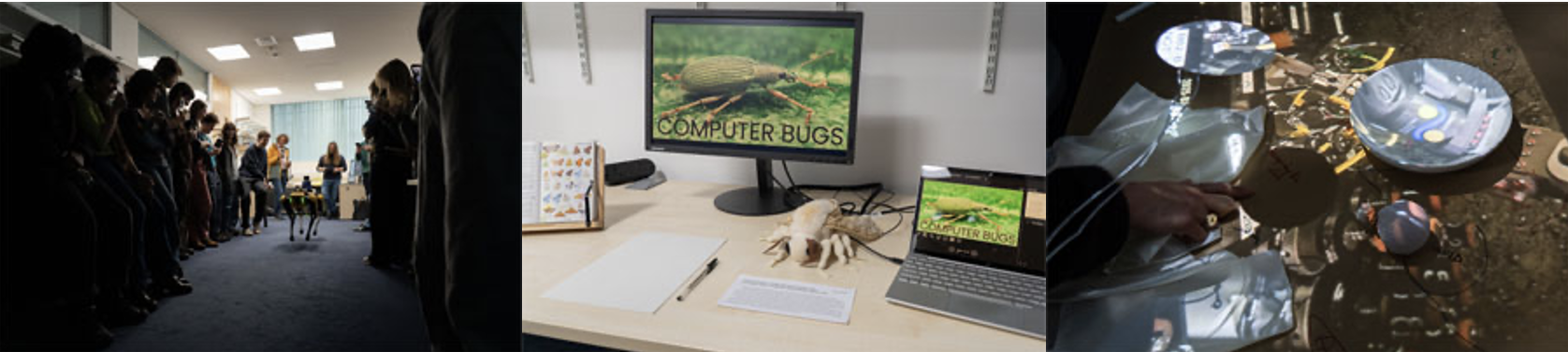
At Oxford, Jonny convened an MSc elective module, Digital Ecologies, exploring the digital mediation of more-than-human worlds. This module involved co-curating a public exhibition—Nature Buffering—with students.
Jonny welcomes enquiries from prospective PhD students interested in any of the research themes mentioned above.
He also has extensive experience in mentoring high school to doctoral students from diverse backgrounds. He welcomes those from underrepresented backgrounds with an interest in studying geography at university to get in touch.
Photographs from the ‘Nature Buffering’ exhibition, curated as part of the Digital Ecologies MSc Course. Source: Karolina Uskakovych
Current PhD Students
- Mari Arold (Oxford): Looping forest: Analogue and digital mediations of landscape and identities in post-Soviet Estonia.
Publications
Please get in touch if you are unable to access any of my publications and I can send you a copy.
Books
- Cusworth, G., Searle, A. and Turnbull, J. (Eds.) forthcoming. On The Metabolic Governance Of Life. Manchester: Manchester University Press.
- Turnbull, J., Searle, A., Anderson-Elliot, h. and Giraud, E. (Eds.) 2024. Digital Ecologies: Mediating More-Than-Human Worlds. Manchester: Manchester University Press.
Journal Articles
2026
- Turnbull, J., Fry, T. and Lorimer, J. accepted (2026). Beavers in Paradise: Prefiguring London’s urban wilds. Environment and Planning E: Nature and Space.
- Turnbull, J., Cusworth, G., Searle, A., Vogel, E., Thoreau, F. and Oliver, C. accepted, 2025. Metabolo-politics: Bovine metabolism and environmental biopower. Theory, Culture & Society.
2025
- Turnbull, J. 2025. Making sense of nuclear natures: Ecologies, Expertise, Aesthetics. Progress in Environmental Geography, 4(4): 436-464.
- Turnbull, J., Fry, T. and Lorimer, J. 2025. (Re)wilding London: Fabric, politics, and aesthetics. Transactions of the Institute of British Geographers.
- Turnbull, J. (2025) Chornobyl-as-laboratory? The curious case of CTVT. East/West: Journal of Ukrainian Studies.
- Parker, N., Searle, A., and Turnbull, J. 2025. Glitch environmentalism. Environment and Planning E: Nature and Space, 8(5): 1579-1605. https://doi.org/10.1177/25148486251353339.
- Stanley, T., Hirons, M., Turnbull, J., Lorimer, J., Kumeh, E., Hafferty, C., Anderson, L. and McDermott, C. 2025. Just nature recovery: A framework for centring multispecies and multi-dimensional justice in land management. Environmental Science and Policy.
2024
- Searle, A., Turnbull, J. and Oliver, C. 2024. Climate Cattle: Metabolic Intervention in the Good Anthropocene. Environmental Humanities.
- Hartman Davies, O., Turnbull, J. and Searle, A. 2024. Digital ecologies in practice. cultural geographies.
- Oliver, C., Turnbull, J. and Richardson, M. 2024. Claiming veganism and vegan geographies. The Geographical Journal.
- Searle, A., Turnbull, J., Hartman Davies, O., Poerting, J., Chasseray-Peraldi, P., Dodsworth, J., Anderson-Elliot, H. 2024. Glitches in the Technonatural Present. Dialogues in Human Geography, 14(2): 342-346.
2023
- Turnbull, J. and Saddington, L. 2023. Editorial introduction: Volume 3, Issue 3: The Roots of Routes. Routes 3(3): 149-154.
- Turnbull, J. and Barua, M. 2023. Living Waste, Living on Waste: a bioeconomy of urban cows in Delhi. Transactions of the Institute of British Geographers, 48(3): 474-490.
- Searle, A., Turnbull, J., Hartman Davies, O., Poerting, J., Chasseray-Peraldi, P., Dodsworth, J. and Anderson-Elliott, H. 2023. Glitches in the technonatural present. Dialogues in Human Geography.
- Turnbull, J., Searle, A. and Lorimer, J. 2023. Anthropause environmentalisms: Noticing natures with the Self-isolating Bird Club. Transactions of the Institute of British Geographers, 48(2): 232-248.
- Searle, A., Turnbull, J. and Adams, W.M. 2023. The digital peregrine: a technonatural history of a cosmopolitan raptor. Transactions of the Institute of British Geographers, 48(1): 195-212.
- von Essen, E., Turnbull, J., Searle, A., Jørgensen, F.A., Hofmeester, T.R., and van der Wal, R. 2023. Wildlife in the Digital Anthropocene: Examining Human-Animal Relations through Surveillance Technologies. Environment and Planning E: Nature and Space, 6(1): 679-699.
2022
- Turnbull, J., Searle, A., Hartman Davies, O., Dodsworth, J., Chasseray-Peraldi, P., Von Essen, E. and Anderson-Elliott, H. 2022. Digital ecologies: Materialities, encounters, governance. Progress in Environmental Geography.
- Unnithan Kumar, S., Turnbull, J., Hartman Davies, O., Hodgetts, T. and Cushman, S. 2022. Moving beyond landscape resistance: considerations for the future of connectivity modelling and conservation science. Landscape Ecology.
- Turnbull, J., Platt, B. and Searle, A. 2022. For a new weird geography. Progress in Human Geography, 46(5): 1207-1231.
- Turnbull, J. and Van Patter, L. 2022. Thinking-Together through Ethical Moments in Multispecies Fieldwork: Dialoguing Expertise, Visibility, and Worlding. ACME: An International Journal for Critical Geographies, 21(2): 147-171.
- Turnbull, J. and Searle, A. 2022. Filmmaking practice and animals' geographies: attunement, perspective, narration. cultural geographies, 29(3): 453-464.
- Van Patter, L., Turnbull, J., and Dodsworth, J. 2022. "More-than-human Collaborations" for Hacking the Anthropocene. feral feminisms, 10: 85-102.
2021
- Oliver, C., Ragavan, S., Turnbull, J., Chowdhury, A., Borden, D., Fry, T., Gutgutia, S. and Srivastava, S. 2021. Introduction to the urban ecologies open collection: A call for contributions on methods, ethics, and design in geographical research with urban animals. Geo, 8(2): 1-7.
- Turnbull, J. 2021. Weird. Environmental Humanities, 13(1): 275-280.
- Searle, A., Turnbull, J., and Lorimer, J. 2021. After the anthropause: Lockdown lessons for more-than-human geographies. The Geographical Journal, 187(1): 69-77.
2020
- Turnbull, J. 2020. Checkpoint dogs: Photovoicing canine companionship in the Chernobyl Exclusion Zone. Anthropology Today, 36(6): 21-24.
- Turnbull, J., Searle, A., and Adams, W.M. 2020. Quarantine encounters with digital animals: More-than-human geographies of lockdown life. Journal of Environmental Media, 1 (Supplement): 6.1-10.
- Searle, A. and Turnbull, J. 2020. Resurgent natures? More-than-human perspectives on Covid-19. Dialogues in Human Geography, 10(2): 291-295.
- Turnbull, J., Searle, A. and Adams, W.M. 2020. Quarantine urban ecologies. Cultural Anthropology, Fieldsights: 19 May.
Book Chapters
2025
- Turnbull, J. and Brown, K. 2025. Compounding Catastrophes in Polissya: Chornobyl’s Legacy Along the E40 Waterway. In P. Högselius and S. Evens (Eds.) The Nuclear-Water Nexus. Cambridge, MA: The MIT Press.
- Turnbull, J., Fry, T. and Van Patter, L. 2025. Animals. In V. Zhang and B. Anderson (Eds.) The promise of cultural geography (pp. 16-18). Cultural Geography (Un)limited Editions.
2024
- Searle, A., Giraud, E., Turnbull, J. and Anderson-Elliott, H. 2024. Introduction: What is Digital Ecologies? In J. Turnbull, A. Searle, H. Anderson-Elliott and E. Giraud (Eds.) Digital Ecologies: Mediating More-than-human Worlds (pp. 1-28). Manchester: Manchester University Press.
2023
- Searle, A. and Turnbull, J. 2023. More-than-Human Reflections on Anthropause. In A. Franklin (Ed.) The Routledge International Handbook of More-than-Human Studies. London: Routledge.
- Turnbull, J. 2023. The Kyiv Thickets. In S. Dovzhyk (Ed.) Ukraine Lab: Global Security, Environment, and Disinformation Through the Prism of Ukraine. New York: Columbia University Press. Available here and here.
- Turnbull, J. and Searle, A. 2023. Digital Geographies and Ecologies. In T. Osborne and P. Jones (eds.) A Research Agenda for Digital Geographies. Cheltenham and Camberley: Edward Elgar Publishing.
- Adams, W.M., Searle, A. and Turnbull, J. 2023. Peregrine flights: the emergence of digital winged geographies. In Petri, O. and Guida, M. (eds.) Winged Worlds: Common Spaces of Avian-Human Lives. London: Routledge.
2022
- Eriksen, C. and Turnbull, J. 2022. Insure the volume? Sensing air, atmospheres, and radiation in the Chornobyl Exclusion Zone. In K. Booth, C. Lucas and S. French (eds.) Climate, Society and Elemental Insurance: Capacities and Limitations.
2021
- Alexis-Martin, B., Turnbull, J., et al. 2021. Nuclear Geographies and Nuclear Issues. In D. Richardson, N. Castree, M.F. Goodchild, A. Kobayashi, W. Liu and R.A. Marston (eds.) International Encyclopedia of Geography: People, the Earth, Environment and Technology.
Edited Special Issues
- Turnbull, J., Sperling, A., Searle, A., Platt, B. and Eades, G. forthcoming. Weird Geographies. Cultural Politics.
- Hafferty, C., Hartman Davies, O., Turnbull, J., Searle, A. forthcoming. Digital Dimensions of Nature Recovery. People and Nature.
- Wrigley, C., Turnbull, J. and Searle, A. forthcoming. Terraforming Terra. Geoforum.
- Turnbull, J. and Searle, A. 2024. Digital Ecologies in Practice. cultural geographies, 31(4): 509-517.
- Turnbull, J. and Searle, A. (Eds.) 2020. The Other Animals. The Philosopher, 108(1). Including contributions from Bill Adams, Maan Barua and Anindya Sinha, Eva Giraud, Lori Gruen, Christine Korsgaard, Diane Morgan, and Cary Wolfe.
Public Scholarship
2025
- Semenik, O. and Turnbull, J. 2025. Woe to those people who are illiterate and do not understand anything. Solomiya: The Environmental Issue.
2023
- Hartman Davies, O., Turnbull, J., Duroux, N. 2023. Digital Ecologies and Bionic Natures: Praxis and Practice. Digital Ecologies Blog, 8 June. Also available from the Oslo School of Environmental Humanities website.
2022
- Ukraine Lab. 2022. Ukraine Lab: British Library workshop. British Library, 28 July.
- Торнбулл, Д. 2022. Київські хащі: що приховують зелені зони столиці. Українська Правда, 23 Вересня [переклад Ніни Мюррей].
- Turnbull, J. 2022. The Kyiv Thickets. The Ecologist, 22 September. [Part of Ukraine Lab writing residency and Ukrainian translation available in Українська Правда]. Public reading available online. Print copy available in Resurgence & Ecologist Magazine.
- Noemi Duroux with the Digital Ecologies team. 2022. The Slowness of Digital Ecologies in Practice. Digital Ecologies Blog, 19 September.
- Zarkh, N., Uskakovych, K., Turnbull, J., Krichevsky, B. Rachkovsky, E. and Melnik, D. 2022. The Dogs That Survived / Собаки, Що Вижили. Against Catastrophe: Ukraine Dispatch, 1.
- Turnbull, J. 2022. All That Breathes: An Interview With Shaunak Sen. Anthroposphere, 8.
- Turnbull, J. 2022. What happened to Robin? Compass, 5th April.
- Turnbull, J. 2022. Chornobyl dogs, Ukrainian zoos, and abandoned animals in Kyiv. Alookso, 4 April. [Korean translation available].
- Unnithan Kumar, S., Turnbull, J., Hartman Davies, O., Cushman, S. and Hodgetts, T. 2022. Minimal Ecologies. Digital Ecologies Blog, 23 February.
- Searle, A. and Turnbull, J. 2022. Reflections on the Anthropause. Goethe Institute.
2021
- Turnbull, J., Searle, A. and Jasper, S. 2021. Ecologies of Emptiness. Emptiness: Living Capitalism and Democracy After (Post)Socialism Blog, 30 April.
- Turnbull, J. and Oliver, C. 2021. Metabolic Ruminations with Climate Cattle: Towards a More-Than-Human Metabo-Politics. CRASSH: Re-Scaling The Metabolic Blog, 24 February.
- Oliver, C. and Turnbull, J. 2021. A Conduit for Value: More-Than-Human Experiments With Chicken Metabolisms. CRASSH: Re-Scaling The Metabolic Blog, 16 February.
- Searle, A., Turnbull, J., and Lorimer, J. 2021. What can geographers learn from the 2020 'anthropause'? Geography Directions, 10 February.
2020
- Searle, A., and Turnbull, J. 2020. Pitch invasion! Football felines. The Urban Field Naturalist.
- Turnbull, J. 2020. Mutant Firebugs. The Urban Field Naturalist.
- Turnbull, J., Searle, A. and Adams, W.M. 2020. Quarantine urban ecologies. Geography Directions.
- Turnbull, J. and Searle, A. 2020. Winged fragility: Flight from evolution to extinction. King's Review, 6: 50-55.
- Turnbull, J. and Malcolm, A. 2020. Mushrooms, Modern Therapeutics and the Psychedelic Renaissance. BlueSci, 46: 12-14.
- Turnbull, J. and Searle, A. 2020. Anthropo(s)cene V: Extinction. The Philosopher, 108(2): 107-111.
- Turnbull, J. and Searle, A. 2020. Anthropo(s)cene IV: Affect. The Philosopher, 108(1): 110-113.
2019
- Turnbull, J. and Searle, A. 2019. Anthropo(s)cene III: Matter/Materiality. The Philosopher, 107(4): 52-54.
- Turnbull, J. and Searle, A. 2019. Anthropo(s)cene II: Animals. The Philosopher, 107(3): 68-70.
- Turnbull, J. and Searle, A. 2019. Anthropo(s)cene I: Posthumanisms. The Philosopher, 107.2: 52-4.
- Alexis-Martin, B., Dyke, J., Turnbull, J. and Malin, S. 2019. How to save a sinking island nation. BBC Future, 15 August.
- Alexis-Martin, B., Dyke, J., Malin, S. and Turnbull, J. 2019. Climate crisis: migration cannot be the only option for people living on 'drowning' islands. The Conversation, 3 July.
- Turnbull, J. and Hedley, T. 2019. Radioactive Wildlife: Canids in the Chernobyl Exclusion Zone. Anthroposphere, 3.
2018
- Turnbull, J. and Hedley, T. 2018. Glaciers in Clay: Exploring melting glaciers through ceramics. Anthroposphere, 2.
- Turnbull, J. 2018. Religion and Spirituality in the midst of climate change: learning from indigenous perspectives. Anthroposphere, 1.
Reports
- Ukraine Lab. 2022. Ukraine Lab: British Library workshop. [Ukrainian translation available / Є український переклад].
- Turnbull, J. 2021. AJ Pressland Fund Winning Report. University of Cambridge Language Centre.
- Turnbull, J. 2019. British Academy Animal Welfare and the Posthumanities Workshop Report.
Dissertations
- Turnbull, J. 2023. Radioactive Resurgence? Understanding Nuclear Natures in the ChornobylExclusion Zone. PhD Thesis, University of Cambridge. [available on request].
- Turnbull, J. 2017. Got Milk? Material Biopolitics and More-than-Human Health at the Gaushala. MSc Thesis, University of Oxford. [available on request].
Exhibitions
- With the Digital Ecologies MSc Collective. 2024 & 2025. Nature Buffering. University of Oxford.
- Uskakovych, K., Turnbull, J., Zarkh, N., Krichevsky, B., Rachkovsky, E. and Melnik, D. 2023. The Dogs That Survived / Собаки Що Вижили. The Cambridge Festival, University of Cambridge.
- Turnbull, J. and Searle, A. 2022. Nature Buffering. Digital Ecologies in Practice, University of Bonn.
- Turnbull, J. 2020. 'Contaminated Canids in the Chernobyl Exclusion Zone', in Visualizing Toxic Places Exhibition, Center for Ethnography, Platform for Experimental Collaborative Ethnography.