

Staff profile
Dr Marco Bernini
Associate Professor in Cognitive Literary Studies

| Affiliation | Telephone |
|---|---|
| Associate Professor in Cognitive Literary Studies in the Department of English Studies | +44 (0) 191 33 43265 |
| Lead of the Narrative and Cognition Lab, Discovery Research Platform in the Institute for Medical Humanities |
Biography
Career
I have held a series of postdoctoral and interdisciplinary research positions .My first postdoctoral appointment was as an IASH Fellow at University of Edinburgh (2011–2012). I subsequently held a Marie Curie Junior Research Fellowship (2012–2014) and a Wellcome Postdoctoral Research Assocateship (2014–2018) in the Department of English Studies at Durham University. During this period, I was also a core member of the Wellcome Trust interdisciplinary project Hearing the Voice, focused on auditory-verbal hallucinations (2012–2021). I am currently a Co-Investigator in the Wellcome Discovery Research Platform in Medical Humanities (2023–2030), where I am also the founding Lab Lead of the Narrative and Cognition Lab. I sit on the Steering Committee of the Institute of Medical Humanities, and I am an Affiliate Fellow in the Institute for Advanced Studies.
Outside Durham, I am Affiliate Faculty at the Literature and the Mind Centre at the University of California, Santa Barbara.I have also been involved in several interdisciplinary research projects, including 'Narrative and Complex Systems' at the University of York (Interdisciplinary Centre for Narrative Studies) and the 'History of Distributed Cognition' project (2014-2018; University of Edinburgh). I have been co-leading with Ben Alderson-Day (Department of Psychology, Durham) an interdisciplinary IAS Major Project on 'Dreams, Narrative and Liminal Cognition' in 2020-2022 (Durham University).
Research Interests
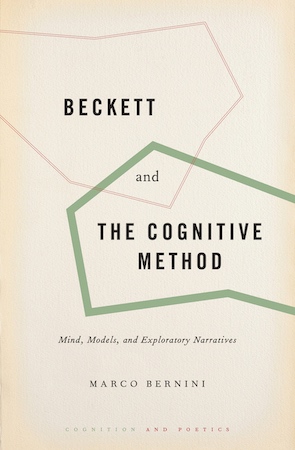
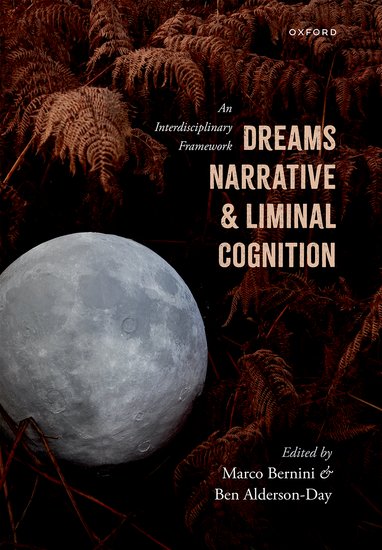
My research crosses narrative theory, cognitive science, and narrative media. I focus on how narrative explores, models, shapes, and elicits cognition. I have published on immersion, 'emersivity', and co-presence in and of fictional worlds across media and narrative technologies. I have developed interdisciplinary approaches and frameworks for narrative modeling and cognition, writing and the extended mind, mental imagery and introspection, mind wandering, self and consciousness, emergence and complexity, liminal states such as dreaming and hypnagogic transitions, and the 'experiential crossing' of storyworlds and characters. My work includes also empirical studies of reading and imagination, as well as research on personification, agency, and Artificial Intelligence. I am the author of Beckett and the Cognitive Method: Mind, Models and Exploratory Narratives (OUP, 2021), and co-editor of the edited collection Dreams, Narrative, and Liminal Cognition (OUP, 2026). I founded and direct the Narrative and Cognition Lab.
I welcome collaborations and PhD proposals on:
- Narrative Theory / Cognitive Narratology
- Media and Film Theory
- Immersion, Reading and Storyworlds
- Emersivity and Co-Presence
- Artificial Intelligence and Fictionality
- Personification and Characterisation
- Narrative, Self and Consciousness
- Narrative, Emergence and Complexity
- Narrative, Dreams and Hallucinations
Teaching
Mind and Narrative (Level 3 Special Topic; Designed and Individually Taught)
How can literary narratives represent or explore the mind? To answer this relatively simple question, we need to undertake a quite complex, interdisciplinary journey to understand what the mind is and what it does in its everyday inner, outer, imaginative, embodied, linguistic, intersubjective, emotional, dreamlike experiences and interactions with the real world. This means first becoming familiar with contemporary cognitive scientific models of the mind and of a variety of cognitive processes, before looking at the ways whereby these have been rendered in, and explored by, literary storyworlds. This Special Topic module therefore will take on a parallel journey into the mind by comparing and contrasting cognitive science with theories of narrative. This is the agenda of the emergent field of cognitive literary studies, to which this module can be considered as an advanced introduction.
Narrative and Thresholds of Consciousness (MA level; co-designed and co-taught with Dr Peter Garratt)
Consciousness is not a monolith: it comes in degrees of awareness, agency and control. When we fall asleep or wake up, are tired or in grief, dream or meditate, wander in thoughts or get immersed in a novel, we enter a liminal zone of consciousness and cognition, where we lose some aspect of our self and witness or engage with spontaneous, intrusive, imagistic, phantasmal presences, thoughts and perceptions. Liminal cognition has only recently started to be explored by contemporary cognitive science, whereas it has been widely explored by novelists and writers of short fiction and memoirs. By critically exploring a diverse range of writing from the nineteenth century to the present, this module will assess how literature can enrich, challenge and correct cognitive scientific models of liminality. Texts studied on the module may change from year to year, but they may include works (or extracts of works) by such writers as De Quincey, Brontë, Dickens, George Eliot, George Egerton, Lewis Carroll, Henry James, Woolf, Proust, Beckett, Joyce, Mansfield, Susanna Clarke, Ali Smith, Sarah Shun-Lien Bynum, Hilary Mantel.
Esteem Indicators
- 2018: Durham Research Staff Awards: Joint first prize (together with Ben Alderson-Day, Department of Psychology).

Publications
Authored book
- Beckett and the Cognitive Method: Mind, Models and Exploratory NarrativesBernini, M. (2021). Beckett and the Cognitive Method: Mind, Models and Exploratory Narratives. Oxford University Press.
- Letteratura e Scienze Cognitive (‘Literature and Cognitive Sciences’).Bernini, M., & Caracciolo, M. (2013). Letteratura e Scienze Cognitive (‘Literature and Cognitive Sciences’). Carocci Editore.
Book review
- Norman Holland, 'Literature and the Brain'Bernini, M. (2011). Norman Holland, ’Literature and the Brain’. Between, 1(1).
Chapter in book
- Dreams and Heighened Narrowed Immersivity: Combining Saturation, Permeability, Presentationality and PresenceBernini, M. (in press). Dreams and Heighened Narrowed Immersivity: Combining Saturation, Permeability, Presentationality and Presence. In Dreams, Narrative, and Liminal Cognition: An Interdisciplinary Framework (pp. 70-92).
- Interdisciplinary Mind Modeling: Exploratory Cycles in Cognitive Science, Narrative Theory, and Fictional CreativityBernini, M. (2025). Interdisciplinary Mind Modeling: Exploratory Cycles in Cognitive Science, Narrative Theory, and Fictional Creativity. In J. Alber & R. Schneider (Eds.), The Routledge Companion to Literature and Cognitive Studies (pp. 170-184). Routledge. https://doi.org/10.4324/9781003387473
- Personification as Élanification: Agency Combustion and Narrative Layering in Worlding Perceived RelationsBernini, M. (2023). Personification as Élanification: Agency Combustion and Narrative Layering in Worlding Perceived Relations. In S. Besser & F. Lysen (Eds.), Worlding the Brain: Neurocentrism, Cognition and the Challenge of the Arts and Humanities (pp. 113-128). Brill Academic Publishers. https://doi.org/10.1163/9789004681293_009
- Reading for Departure: Narrative Theory and Phenomenological Interviews on HallucinationsBernini, M. (2022). Reading for Departure: Narrative Theory and Phenomenological Interviews on Hallucinations. In B. Alderson-Day, A. Woods, & C. Fernyhough (Eds.), Voices in Psychosis: Interdisciplinary Perspectives (pp. 108-116). Oxford University Press. https://doi.org/10.1093/oso/9780192898388.003.0013
- A Panting Consciousness: Beckett, Breath and Biocognitive FeedbackBernini, M. (2021). A Panting Consciousness: Beckett, Breath and Biocognitive Feedback. In C. Saunders, D. Fuller, & J. Macnaughton (Eds.), The Life of Breath, Classical to Contemporary: Literature, Culture, and Medicine (pp. 435-459). Palgrave Macmillan, Cham. https://doi.org/10.1007/978-3-030-74443-4_21
- The Heterocosmic Self: Analogy, Temporality and Structural Couplings in Proust's 'Swann's WayBernini, M. (2020). The Heterocosmic Self: Analogy, Temporality and Structural Couplings in Proust’s ’Swann’s Way. In M. Anderson, P. Garratt, & M. Sprevak (Eds.), Distributed cognition in Victorian culture and modernism. Edinburgh University Press.
- Narrative and Cognitive Modeling: Insights From Beckett Exploring Mind's ComplexityBernini, M. (2018). Narrative and Cognitive Modeling: Insights From Beckett Exploring Mind’s Complexity. In R. Walsh & S. Stepney (Eds.), Narrating complexity. (pp. 233-251). Springer Verlag. https://doi.org/10.1007/978-3-319-64714-2_17
- The Opacity of Fictional Minds: Transparency, Interpretive Cognition and the Exceptionality ThesisBernini, M. (2016). The Opacity of Fictional Minds: Transparency, Interpretive Cognition and the Exceptionality Thesis. In P. Garratt (Ed.), The cognitive humanities : embodied mind in literature and culture. (pp. 35-54). Palgrave Macmillan. https://doi.org/10.1057/978-1-137-59329-0_3
- Gression, Regression, and Beyond: A Cognitive Reading of The UnnamableBernini, M. (2014). Gression, Regression, and Beyond: A Cognitive Reading of The Unnamable. In D. Tucker, M. Nixon, & D. Van Hulle (Eds.), Revisiting Molloy, Malone meurt / Malone dies and L’innommable / The unnamable. (pp. 193-209). Brill Academic Publishers. https://doi.org/10.1163/9789401211635_015
Edited book
- Dreams, Narrative, and Liminal CognitionBernini, M., & Alderson-Day, B. (Eds.). (2026). Dreams, Narrative, and Liminal Cognition. Oxford University Press.
Journal Article
- AI as Character: Real Patterns in Fictive InteractionsBernini, M. (in press). AI as Character: Real Patterns in Fictive Interactions. Style.
- Phantasmal Intersubjectivity: Co-Presence and the Emersivity of Literary CharactersBernini, M. (2026). Phantasmal Intersubjectivity: Co-Presence and the Emersivity of Literary Characters. Poetics Today: International Journal for Theory and Analysis of Literature and Communication, 47(1), 95-129. https://doi.org/10.1215/03335372-12186036
- Resampling (Narrative) Stream of Consciousness: Mind Wandering, Inner Speech, and Reading as Reversed IntrospectionBernini, M., & Fernyhough, C. (2022). Resampling (Narrative) Stream of Consciousness: Mind Wandering, Inner Speech, and Reading as Reversed Introspection. Modern Fiction Studies, 68(4), 639-667. https://doi.org/10.1353/mfs.2022.0045
- Processing Speech and Thoughts during Silent Reading: Direct Reference Effects for Speech by Fictional Characters in Voice-Selective Auditory Cortex and a Theory-of-Mind NetworkAlderson-Day, B., Moffatt, J., Bernini, M., Mitrenga, K., Yao, B., & Fernyhough, C. (2020). Processing Speech and Thoughts during Silent Reading: Direct Reference Effects for Speech by Fictional Characters in Voice-Selective Auditory Cortex and a Theory-of-Mind Network. The Journal of Cognitive Neuroscience, 32(9), 1637-1653. https://doi.org/10.1162/jocn_a_01571
- Imaginary companions, inner speech and auditory verbal hallucinations: What are the relations?Fernyhough, C., Watson, A., Bernini, M., Moseley, P., & Alderson-Day, B. (2019). Imaginary companions, inner speech and auditory verbal hallucinations: What are the relations? Frontiers in Psychology, 10, Article 1665. https://doi.org/10.3389/fpsyg.2019.01665
- Affording Innerscapes: Dreams, Introspective Imagery and the Narrative Exploration of Personal GeographiesBernini, M. (2018). Affording Innerscapes: Dreams, Introspective Imagery and the Narrative Exploration of Personal Geographies. Frontiers of Narrative Studies, 4(2), 291-311. https://doi.org/10.1515/fns-2018-0024
- Uncharted features and dynamics of reading: Voices, characters, and crossing of experiencesAlderson-Day, B., Bernini, M., & Fernyhough, C. (2017). Uncharted features and dynamics of reading: Voices, characters, and crossing of experiences. Consciousness and Cognition, 49, 98-109. https://doi.org/10.1016/j.concog.2017.01.003
- Crawling Creating Creatures: On Beckett's Liminal MindsBernini, M. (2015). Crawling Creating Creatures: On Beckett’s Liminal Minds. European Journal of English Studies, 19(1), 39-54. https://doi.org/10.1080/13825577.2015.1004916
- Supersizing narrative theory: on intention, material agency, and extended mind-workersBernini, M. (2014). Supersizing narrative theory: on intention, material agency, and extended mind-workers. Style, 48(3), 349-366. https://doi.org/10.5325/style.48.3.349
- Interdisciplinarity as Cognitive Integration: Auditory verbal Hallucinations as a Case studyBernini, M., & Woods, A. (2014). Interdisciplinarity as Cognitive Integration: Auditory verbal Hallucinations as a Case study. Wiley Interdisciplinary Reviews: Cognitive Science, 5(5), 603-612. https://doi.org/10.1002/wcs.1305
- Interdisciplinary Approaches to the Phenomenology of Auditory Verbal HallucinationsWoods, A., Jones, N., Bernini, M., Callard, F., Alderson-Day, B., Badcock, J., Bell, V., Cook, C., Csordas, T., Humpston, C., Krueger, J., Larøi, F., McCarthy-Jones, S., Moseley, P., Powell, H., Raballo, A., Smailes, D., & Fernyhough, C. (2014). Interdisciplinary Approaches to the Phenomenology of Auditory Verbal Hallucinations. Schizophrenia Bulletin, 40(Suppl 4), S246-S254. https://doi.org/10.1093/schbul/sbu003
- Introspection, isolation, and construction: Mentality as activity. Commentary on Hurlburt, Heavey & Kelsey (2013). “Toward a phenomenology of inner speaking”Kruger, J., Bernini, M., & Wilkinson, S. (2014). Introspection, isolation, and construction: Mentality as activity. Commentary on Hurlburt, Heavey & Kelsey (2013). “Toward a phenomenology of inner speaking”. Consciousness and Cognition, 25, 9-10. https://doi.org/10.1016/j.concog.2014.01.005
- ‘Blueprints for Worldshaking: Worlds, Consciousnesses and Paratext in "L’Adalgisa".'Bernini, M. (2012). ‘Blueprints for Worldshaking: Worlds, Consciousnesses and Paratext in "L’Adalgisa".’. Edinburgh Journal of Gadda Studies, 7(11).
- Manifestare Territori Acustici: Il Personaggio in Gadda, Bachtin, DeleuzeBernini, M. (2012). Manifestare Territori Acustici: Il Personaggio in Gadda, Bachtin, Deleuze. Edinburgh Journal of Gadda Studies, 7.
Newspaper/Magazine Article
- Samuel Beckett's Articulation of Unceasing Inner SpeechBernini, M. (2014). Samuel Beckett’s Articulation of Unceasing Inner Speech. The Guardian.