

/filters:quality(70)/prod01/prodbucket01/media/durham-university/alumni-/page-header-banners/News-Banner.png)
Michael Pedersen: "Keep good company whilst staying consistently curious..."

Later this month, Durham will host its annual Book Festival, bringing three days of literary and cultural events to students and the local community.
This year’s programme features leading writers, thinkers, performers and broadcasters, including our Chancellor, Dr Fiona Hill, who will record a live episode of her Forged in the North podcast series with singer-songwriter and honorary graduate Neil Tennant.
The festival also welcomes back three Durham alumni: bestselling author Lucy Foley, whose novel, The Hunting Party, is being distributed locally as The Festival’s Big Read, TikTok historian Katie Kennedy, and award-winning poet. writer and Edinburgh Makar Michael Pedersen.
We caught up with Michael (Law, University College, 2002-2008), ahead of his appearance with fellow poet Hollie McNish at the Gala Theatre - an evening that promises to be a hilarious and heartfelt evening of poetry.
In an interview with The Scottish Herald, Michael described his time at Durham as ‘ridiculous but brilliant’ - speaking to us, he explained further how experiences along the way have influenced his work and career:
Were you already writing poetry before university, or did that develop during your studies – and were there any skills learned at university that have proved valuable as a poet?
Yes, I had a notepad full of poems stashed away in my bedroom that I’d whip out for anyone willing to listen. I’d published a couple of pieces in a Scots language magazine back in high school but dropped the Scots and was upping the emotional angst over the undergraduate years.
I actually studied Law, so wasn’t really exploring how to parse poems or prose, but I was learning how to wield words. And I was building a huge new lexicon from legal language as I began reading case law like the scripts of plays. There’s a lot of histrionics and theatre locked in the legal world and I was there for it. I pretty much hoodwinked myself into thinking I was studying literature whilst immersed in a Bachelor of Laws (LLB).
Are there themes in your work today that can be traced back to your student years?
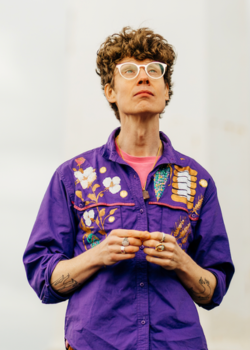 Of course, although they’re more universal topics that quest with us all through life.
Friendship is the most strident theme that permeates all my work – from poetry to non-fiction and into my recent fiction: it’s the soppy steer that guides them all. I think that friendships might just be the greatest love affairs of our lives. Ruminating on the people I met at university and the ways in which we influenced and supported each other remains a real thrill.
Alongside that, I adore the narrative of a character coming into themselves, be that the traditional coming-of-age story or someone just learning how to be in this vast and capricious world.
Both these themes, friendship and coming-of-age, collide together at university with abundance and splendour.
Plus, going from a high school in Edinburgh that was once the biggest state school in Europe with the appearance of a Soviet high-rise to feasts in the Great Hall of Durham Castle was a gorgeous and gonzo social gauntlet to run. It lit the fuse for all manner of yarns.
Has poetry and performing helped to define and express your own character?
I’m even more vehement about this one. Poetry for me is a compass, a crutch, and an anthem of survival. It is the means by which I have learned to investigate this world. I’d be lesser without it: lighter in both courage and love. It’s embedded in all the big questions I’m still learning how to ask and has allowed me to live a fuller and more fulfilled existence. Sounds a wee bit cliched but it’s true.
Do you have any advice to offer current students considering a literary career?
Just to read and write and cherish literature with abundance and not to try and plan the way you expect things to happen too meticulously – be that publishing expectations or job goals. The majority of the beautiful, fascinating and, occasionally, life-altering things that have happened to me in my career have come around organically or resulted from people reacting to my passion and enthusiasm. Joy and exuberance are gloriously infectious.
Of course, set your sights on certain opportunities but be prepared to edit and shape-shift along the way – just as you would when working a piece of text into its most resplendent form. This coming from someone who relishes the editorial process, both in book form and the life beyond.
Finally, keep good company whilst staying consistently curious.
Read more:
About Michael Pedersen
About what’s on offer at The Durham Book Festival 2026
Image credits: Shaun Murawski
Durham University takes pride in the achievements and contributions of its 230,000 alumni and supporters. Stories that cite views, talks and published work reflect the individual's contribution in their personal or professional capacity and do not represent the University's position or endorsement.