

/filters:quality(70)/prod01/prodbucket01/media/durham-university/departments-/physics/research/DIRDIgroup-1230X675.jpg)
DIRDI Student Case Studies
Coltraco and DIRDI have supported multiple student development opportunities and projects with Durham University. Through this collaboration, we have achieved outcomes that would not have been possible independently, benefiting both students and the University. Our joint work has also opened new avenues for high‑quality research helping achieve DIRDI’s 1st and 2nd aims.
Student Employability and Development
Durham University’s Engineering Department have structured their degree programmes to produce talented graduates, and we are proud to have supported the development of some of these students.
The research developed over the course of the student projects have gone onto be used in the student's post-graduate applications for industry and used in their interview processes. This has resulted in students getting a job and building a positive impact on the perception of the university.
Coltraco ran a Level 3 Design Project with the Engineering Department to develop a flexible interface and test platform for Coltraco’s sensors. The resulting project was branded the Portarover to cohere with the company's existing branding.
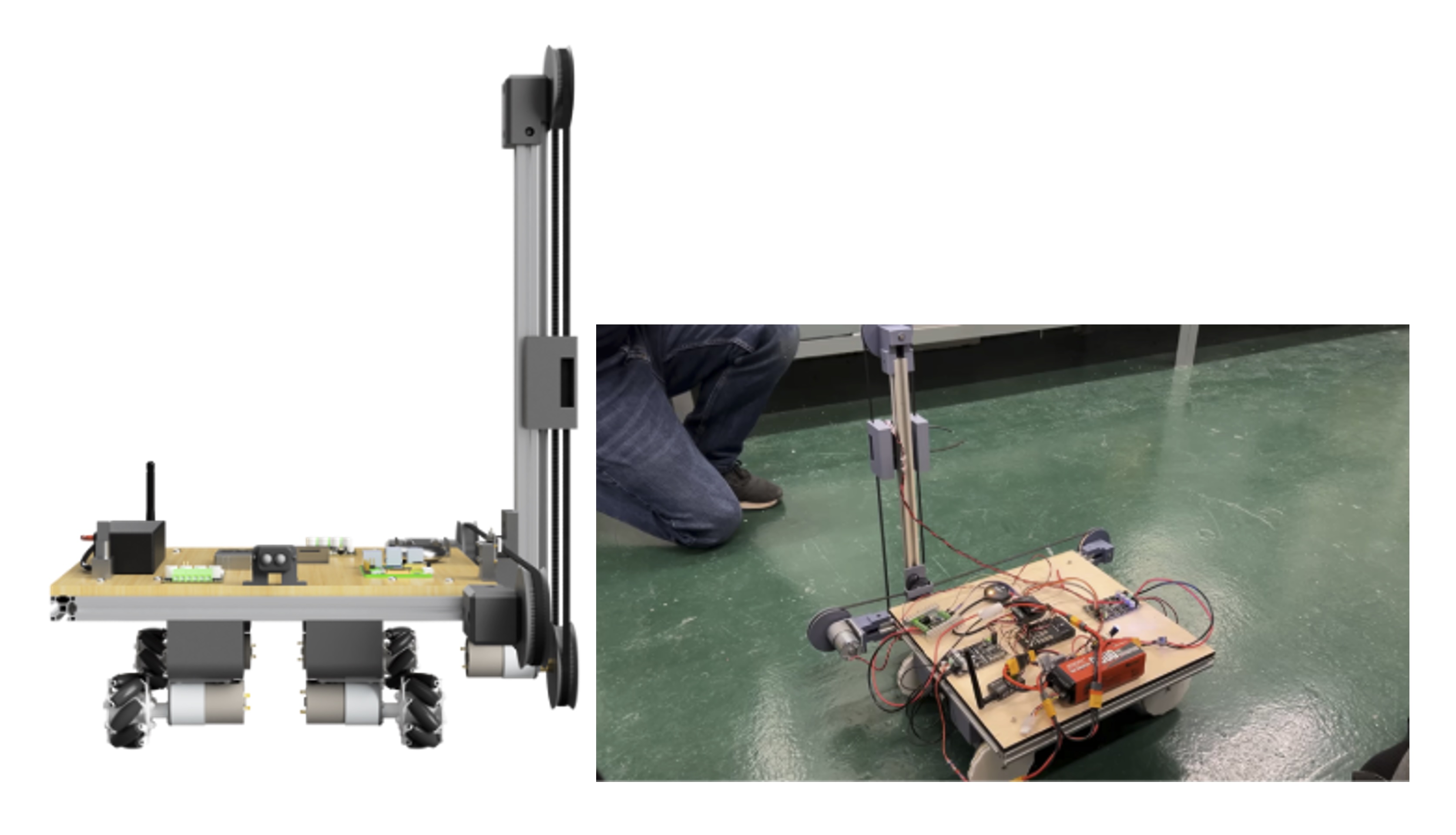
One of the students used this project as the basis for their interview presentation at a leading semiconductor supplier and the designed PCB was taken as part of their portfolio. They were later awarded the job. The research undertaken as part of the electronics side of the project has since been relevant to their job and provided a good foundation.
The student also believes that his employers have a more positive view of Durham Engineering graduates as a result.
Interdisciplinary Research
DIRDI provides Durham University students the opportunity to engage in interdisciplinary research in the course of their studies and provides a new perspective for the potential applications of their knowledge. In addition to helping advance research interest of Durham University Professors, outlining grant opportunities, and collaboration opportunities with other Universities.
In 2024, DIRDI led a Physics Team Project to develop a portable ultrasonic technology for predicting Ischemic strokes. This was proposed by a DIRDI Fellow and Durham Engineering Professor. The resulting project aimed to explore how these measurements could be achieved using a handheld or desktop-sized ultrasonic technology.
Not only does this project sit at the intersection of physics and biosciences but it also introduced engineering considerations to the students. The study confirmed that ultrasonic technology can measure arterial thickness and blood flow, key indicators for stroke prediction.
While we are responsible for initiating these projects, our work also involves guiding their progression to ensure they translate into substantive and measurable impacts beyond the academic setting. In the case of this project, we engaged with partners to discuss their potential interest as an end-user and funding opportunities to take this research forward.
This meeting provided the Fellow with the details of various grant opportunities and of the supply chain process information should they wish to take this project forward. Ultimately, this would have included more students had this progressed.
Applied Research and Student Advancement
DIRDI also allows students to undertake research with industrial partners that may not otherwise have engaged with Durham University. Student projects have created meaningful opportunities for students to contribute to DIRDI’s commercialised research, resulting in practical, real‑world outputs that demonstrate value beyond traditional citation measures.
DIRDI granted Miss Vogiatzi the opportunity to undertake two summer research placements in 2022 and 2023, focusing on supercritical fluids and ultrasound-assisted electroplating, respectively.
The electroplating project provided Miss Vogiatzi the opportunity to explore the real-world application of physics and gain a wider understanding of the processes involved in the commercialisation and translation of research. This was done alongside, and guided by, a thorough and high-level theoretical and computational study into the physical processes occurring in the electroplating solution.
Furthermore, Ms Vogiatzi conducted experimental research attempting to fill some of the gaps in the literature on supercritical fluids. The findings of this study were novel, because, despite the relative limited research on this subject up to that point, she succeeded in identifying and applying for the very first time a model that fitted the experimental data on supercritical Nitrogen.
Throughout these placements, she not only met, but exceeded, expectations, making abundantly obvious that she has a wonderful problem-finding and problem-solving mind evolving into a first class, dedicated Physicist. Her research has not only contributed to the advancement of knowledge in our institute but also promised to influence the wider scientific community. Following these placements, DIRDI supported Miss Vogiatzi’s application for a PhD at Imperial College onto which she was accepted.
Ms Vogiatzi said: “Within DIRDI I have had the chance to investigate the physics of supercritical fluids; an area of research which remains not well understood till this day. These fluids have temperatures and pressures that are found above the liquid-gas critical point, where distinct gas and liquid phases do not exist anymore. They have both gas-like and liquid-like properties meaning that equations which we would typically use such as the real gas Van der Waals do not produce accurate predictions. As part of my summer internship with Coltraco I collected data on supercritical Nitrogen and tested the fit of models such as the crossover model, volume translated and modified real gas equations. This research is ongoing, but it is safe to say that the modification of the real gas equation has shown some promising and exciting results. I am looking forward to developing this model further and achieving accurate predictions.”
Coltraco Ultrasonics: A Case Study
For 12 years Coltraco have run a flexible student employment programme, which we call our “Rolling Durham Undergraduate Internship Programme”, across the Science and Arts Faculties. This internship programme offers students paid part-time research work during term-time and holiday periods and then selecting the best of them for full-time paid 10-week summer internships based at our laboratory. This programme often results in permanent staff graduate employment.
An example of this is Mr Lewis Kell who is employed as an electronics engineer in our RDDE Team. Lewis completed a Winter Internship Dec 2021, followed by part-time work, and a Summer Internship in 2022.
The work with Coltraco allowed Lewis to apply concepts from his university studies directly to real-world projects, creating strong synergies between theory and practice. Lewis said:
- I gained a good feel for the company’s culture, operations, and expectations while still at university. Likewise, the team at Coltraco was able to understand my skills and work style.
- Because of my prior engagement, I was able to “hit the ground running” when I started full-time, already familiar with key processes and projects.
- Coltraco consistently provided guidance, mentorship, and encouragement throughout my time working with them, helping me grow professionally.