


Latest News
Pioneering research to support digital innovation in pharmaceuticals
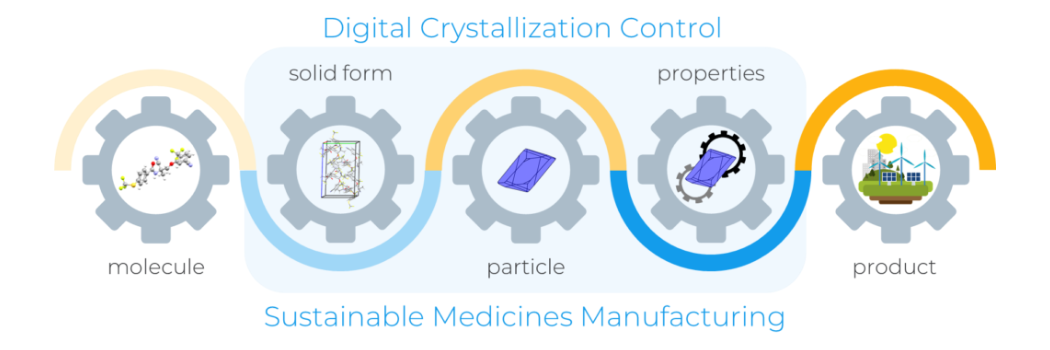
We along with Cambridge Crystallographic Data Centre (CCDC) have secured funding as part of an Innovate UK grant to advance sustainable pharmaceutical manufacturing.
Climate change is hampering River Thames clean-up efforts
Global warming is making it harder to clean up the iconic River Thames in the UK, according to a new study involving scientists from Durham University.

Researchers help protect migratory birds
Researchers from our top-rated Biosciences department in collaboration with the British Trust for Ornithology (BTO), have conducted a study to understand the challenges faced by migratory birds across Europe and Africa.

Helping stroke survivors with visual perception problems
A new 15-minute tool to screen stroke survivors for visual perception problems has been launched by researchers from Durham and Oxford universities.

Digital revolution in humanities research
Our top-rated Computer Science department is leading the charge in bringing high-performance computing (HPC) to the humanities through a new UK Research and Innovation (UKRI) funded project.

Women in chemistry: Q&A with Professor Aurora J. Cruz-Cabeza
Dr Aurora J. Cruz-Cabeza is a Professor of Materials Chemistry in our department of Chemistry, in the field of molecular crystals and crystallisation.

Durham researchers help discover largest radio jet ever seen in early Universe
A team of astronomers, including researchers from our top-rated Physics department, have discovered the largest radio jet ever seen in the early Universe.

Leading astronomer helps uncover unique giant radio galaxy
South Africa’s MeerKAT telescope has revealed a remarkable cosmic discovery—Inkathazo, a newly identified giant radio galaxy (GRG), whose name means trouble in isiZulu and isiXhosa.

Bioscientists achieve major advancement in protein-metal binding research
Researchers from our top-rated Biosciences department have made an exciting discovery that could revolutionise how scientists design and engineer biological systems.

Scientists achieve world-leading quantum entanglement of molecules
Scientists from our top-rated Physics department have set a global milestone by achieving quantum entanglement of individual molecules using cutting-edge magic-wavelength optical tweezers.

Breakthrough technique to stop irregular heartbeats
Researchers from our top-rated Computer Science department have made an exciting discovery that could improve how doctors treat dangerous heart rhythms, like those seen in cardiac arrest.

Prestigious Leverhulme Fellowship awarded to social psychology pioneer
Professor Richard Crisp from our top-rated Psychology department has been honoured with the prestigious Leverhulme Trust Major Research Fellowship to develop a groundbreaking theory in social psychology.
