


New research reimagines inclusive physical education for all young people
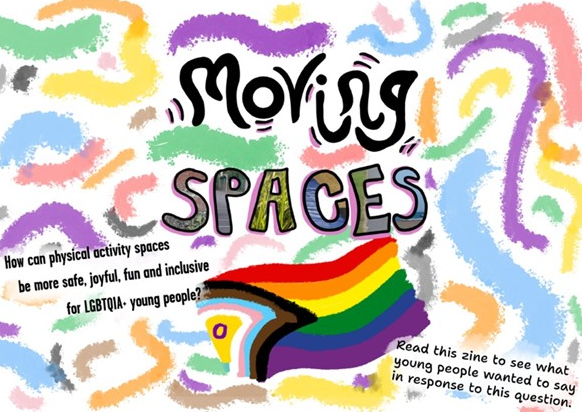
New SPHR research from colleagues in the Department of Sport and Exercise Sciences and Fuse, the Centre for Translational Research in Public Health, explores how physical education (PE) and school sport could be reimagined to create safer and more inclusive environments for all young people.
The new paper, Marginalised trans youth, physical education and school sport: reimagining inclusive spaces for all, authored by Dr Cat Phipps, Professor Stacey Pope, Scarlet Hall and Professor Caroline Dodd-Reynolds, has been published in Sport, Education & Society.
Listening to young people's experiences
The research sought to better understand physical activity lived experiences of young people with a range of gender identities, via a series of co-produced, creative workshops, which were intended to facilitate safer spaces for raising conversations.
Drawing on cultural cisgenderism and inclusive design principles, findings consider how school-based PE remains highly structured around assumptions relating to gender, bodies and abilities. Furthermore, existing approaches to inclusion can often be reactive and individualised, leaving young people to negotiate access within systems that were not designed with their needs in mind.
Reimagining PE for everyone
Rather than relying on individual accommodations, the researchers argue for a shift towards structural and inclusive design, creating PE environments that anticipate and embrace the diversity of young people from the outset. This approach has the potential to benefit all pupils by challenging restrictive gender expectations and removing barriers to participation.
Based on the collective insights of trans and non-binary young people, and drawing theoretically upon universal design, the study offers four principles for reimaging inclusive PE and school sport:
- Non-gendered classifications such as ability level could be used to organise PE groupings
- Changing and toilet facilities should be redesigned to ensure equitable access, privacy, and safety, or alternatively schools could remove the requirement to change on site by allowing pupils to attend in appropriate sportswear
- PE uniforms should be practical and non-gendered to reduce anxiety and enforced bodily exposure
- Inclusive design should extend beyond physical spaces to school culture through staff and pupil education, bystander training, clear reporting mechanisms, and institutional accountability.
Find out more
Read the paper here: Marginalised trans youth, physical education and school sport: reimagining inclusive spaces for all
Why safer spaces matter for young people’s physical activity
NIHR-SPHR Moving Spaces Guide Re-framing physical activity for young people