

/prod01/prodbucket01/media/durham-university/attractions-/botanic-gardens-/79619-1920X290.jpg)
CIL and CSDLP host webinar on: The Road Ahead for Global Climate Action Post-COP30: A Cross-Regional Perspective
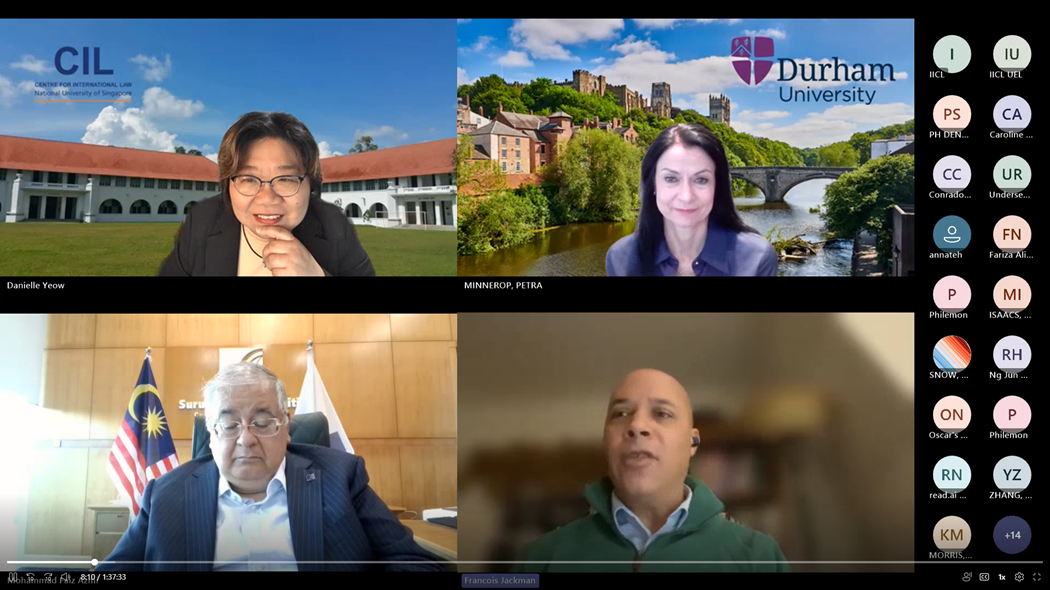
Durham University's Centre for Sustainable Development Law and Policy (CSDLP) and the Centre for International Law (CIL) at the National University of Singapore, co-hosted a joint webinar last week on "The Road Ahead for Global Climate Action Post-COP30: A Cross-Regional Perspective".
Last week, we welcomed a cross-regional panel of experts from the Caribbean, ASEAN, Africa and Europe, to unpack the outcomes of COP30 and chart the road ahead from their regional perspective.
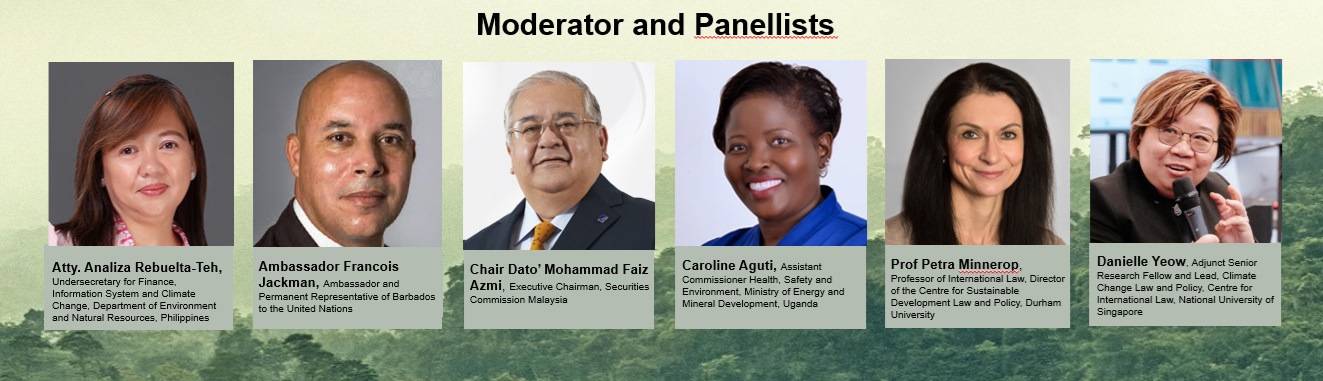
Speakers converged on a clear message: finance, cooperation and implementation will define the next chapter of global climate action.
Key themes & insights:
- Climate Finance is the defining challenge
Speakers from Barbados, Malaysia, the Philippines and Uganda underscored a shared concern: despite progress in Belem - from adaptation indicators to the operationalisation of the Loss & Damage Fund - financing remains far short of what developing countries need. Innovative mechanisms such as debt swaps, blended finance, concessional capital, regional taxonomies and social financing platforms were highlighted as essential tools to mobilise investment for resilience and energy transition.
- Geopolitics are shaping climate pathways
Amid rising global instability and economic uncertainty, Ambassador François Jackman warned that the “cloudy” geopolitical backdrop has become “downright stormy.” Yet these shocks also create new incentives to accelerate the shift from fossil fuel dependence toward renewables.
- Regional cooperation is emerging as a powerful driver
From the ASEAN Power Grid and cross‑border renewable energy sharing, to Africa’s push for regional hubs on critical minerals, countries emphasised that regional blocks are stepping up where multilateral processes slow down.
- A just and inclusive transition
Speakers stressed that climate action must be people‑centred. The Philippines showcased its forthcoming ASEAN Just Transition Framework, while Africa and Asia emphasised protections for workers, communities and those most vulnerable to slow‑onset climate impacts.
- The 1.5°C goal remains non‑negotiable
Legal experts highlighted COP30’s continued affirmation of the 1.5°C target and the importance of international law and science, including the IPCC, in guiding ambitious national commitments.
And in terms of looking ahead to COP31, across all regions, priorities converged on three urgent needs:
- Scaling and simplifying climate finance access
- Strengthening adaptation implementation and measurement
- Clarifying fossil fuel transition pathways while ensuring equity and energy security
As one speaker put it, COP31 must become the “impact COP”, where commitments turn into real-world outcomes.
