

/filters:quality(70)/prod01/prodbucket01/media/durham-university/research-/research-institutes/durham-energy-institute/landscapes-cityscapes-montages-etc/Walney-sunset-2000X800.jpg)
Rebuilding the Coalfield Common Wealth: DEI at the Redhills Assembly 2026
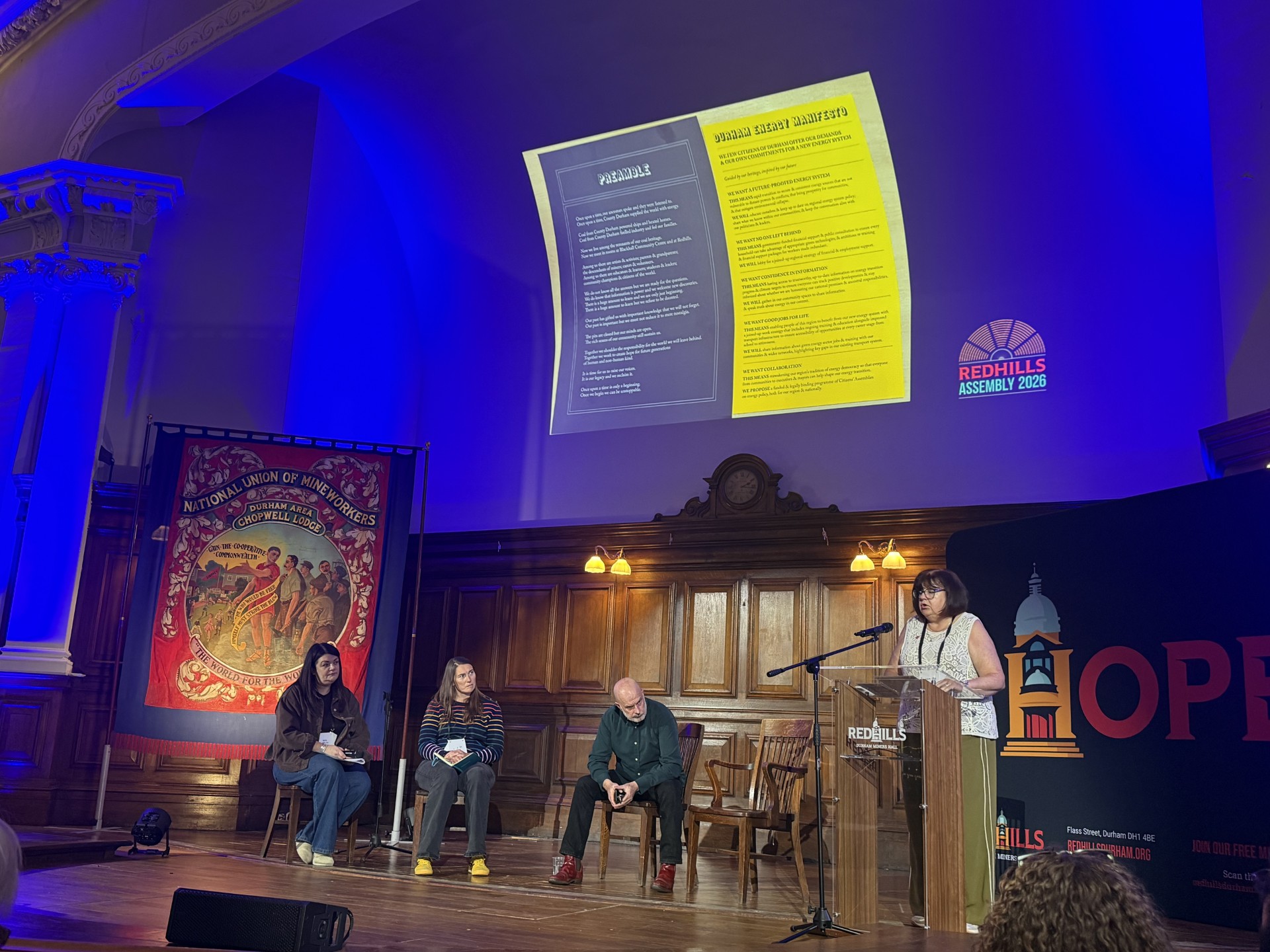
Durham Energy Institute was represented at the Redhills Assembly 2026, a two-day gathering exploring how communities across the Durham coalfield can build a fairer, more sustainable and locally controlled economy.
Held at Redhills, Durham Miners’ Hall, the Assembly brought together community organisations, social enterprises, researchers, campaigners and practitioners from the North East and beyond under the theme of “Our Coalfield Common Wealth.”
Across the two days, discussions considered how the traditions of solidarity and collective action that shaped the Durham coalfield might provide a foundation for its future.
Opening the Assembly, Chris McDonald MP reflected on the historic role of the coalfield in generating wealth and the importance of rebuilding community wealth. A recurring question throughout the event was how more of the money entering communities through wages, public spending, investment and grants can be retained and recirculated locally rather than immediately leaving the area.
Sessions explored six interconnected themes: living culture, mutual aid, collective ownership, a solidarity economy, taking back control and looking after place.
Examples from across the UK demonstrated what this can mean in practice. Hastings Commons showed how neglected buildings can be brought into community ownership and regenerated so that the value created remains locally owned. Kitty’s Laundrette in Liverpool demonstrated how an everyday service can become a worker-community cooperative, combining affordable laundry with social activity, environmental responsibility and community support.
Kindred presented its approach to investing in socially trading organisations in Liverpool City Region, while Woodshed Workshop demonstrated how practical enterprise can combine skills development, employment and individual support.
Energy featured prominently. The Durham Energy Manifesto, developed through Durham Energy Council with residents from former coalfield communities, highlighted demands for secure and sustainable energy, a fair transition, trusted information, accessible green jobs and meaningful citizen power over energy policy.
The Horden mine-water heat project provided a particularly relevant example of how the coalfield's industrial legacy might contribute to its future. Water in abandoned mine workings represents a potential source of low-carbon heat which could support homes, public buildings, food production and new local enterprises, with ambitions for community ownership and local benefit.
International learning came from Boston's Ujima Project, which has developed a democratically governed investment model through which communities help determine where capital is invested. Its model combines small investments from residents with larger investments and philanthropic capital, demonstrating how people and institutions with very different financial means can collectively build significant investment power.
One of the strongest messages to emerge was that a just transition is about more than changing technologies. Former mining communities understand the consequences of poorly managed economic transition particularly well. The transition to a low-carbon economy therefore needs to create lasting employment, retain wealth locally and give communities a genuine role in determining their futures.
For Durham Energy Institute, the Assembly reinforced the close connections between energy transition, community wealth building, ownership and energy justice.
The question is no longer simply how investment can be attracted into the coalfield, but who owns that investment, who makes the decisions, where the benefits go and how much of the value created remains within our communities.