

Staff profile
Dr Charlotte Wilks
Post Doctoral Research Associate
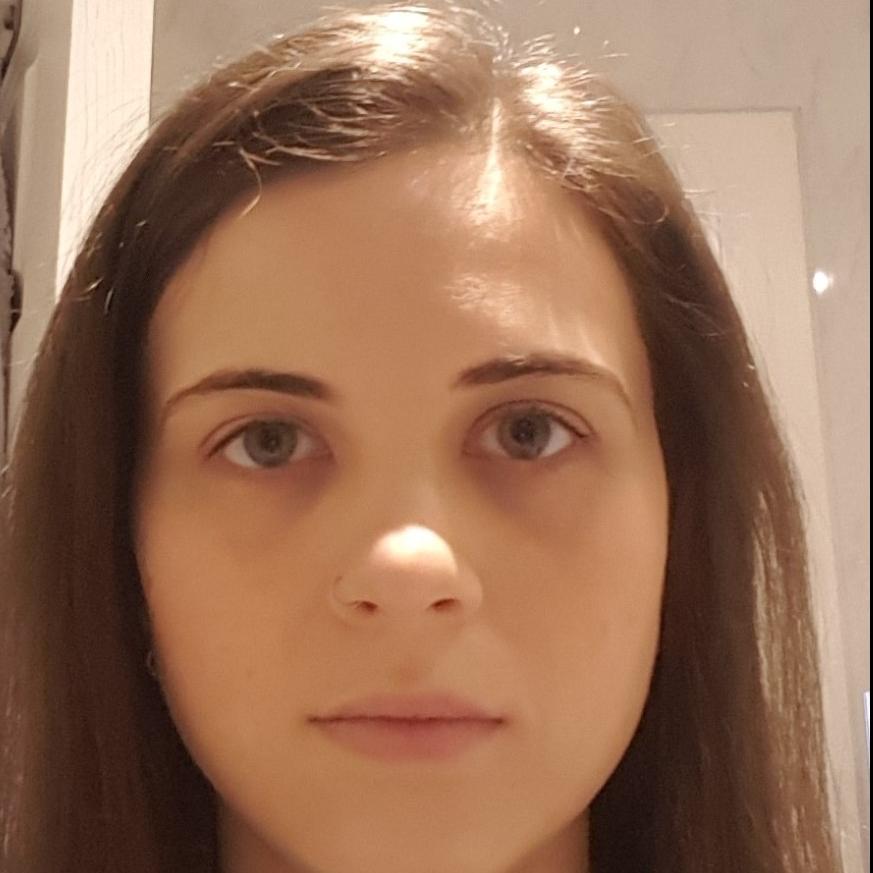
| Affiliation |
|---|
| Post Doctoral Research Associate in the Department of Psychology |
Biography
Current Role and Interests
I am a Postdoctoral Research Associate currently working on the “Learning to Innovate: Development and Diversity” ESRC and NSF funded project led by Dr Bruce Rawlings.
On this ambitious project we are conducting cross-cultural, multi-site research to investigate the cognitive processes (executive functions, creativity, curiosity, causal reasoning, mental rotation) and educational factors which may support the development of children’s tool innovation abilities. This involves coordinating and collaborating with researchers at seven international study sites to implement a battery of ten cognitive tasks in 1200 children aged 5-11 in addition to conducting academic knowledge assessments, and teacher/school and caregiver surveys.
We’re open to supervising committed research assistants (bachelor’s level Year 1-3) to assist with data collection and processing on this project.
I am also the PDRA rep on the University Research Committee.
In general, I am interested in studying the cognitive processes underlying cumulative cultural evolution and innovation from a developmental perspective. I am also interested in various aspects of neurodiversity research, particularly autism and (more recently) dyslexia.
Career History
I started my career with an undergraduate degree in Bioveterinary Science from the University of Liverpool (2011) followed by an MSc in Neuroscience from University College London (2013). I then worked in administration for a few years before training to be a primary school teacher (with a mathematics specialism) at the University of Leicester and working as a supply teacher in Bradford and Leeds (2015-2016). Next, I did a PhD in Developmental Psychology at the University of Stirling (2016-2020). During this PhD I explored the cognitive capacities which may underlie human cumulative culture: the accumulation of knowledge and skills which increases the complexity and/or efficiency of technologies over time. I tackled this question from a developmental perspective, designing and conducting game-based table-top and tablet-based experimental tasks for children aged 2-11, to examine the role of cognitive development on our ability to use social information.
Since completing my PhD I have continuously held postdoctoral developmental psychology-based research positions at UK universities: Abertay, Edinburgh, Warwick, Nottingham and now Durham.
Publications
Journal Articles
Rawlings, B., Basu, A., Bernardo, A., Craton, W., Edmonds, K., Foulkes, E., Greenwood, H., Johnstone, E., Keag, S., Shen, M., Vella, E., Wilks, C.E.H., & Roome, H.E. (2025). Creative minds, equal ground: no socioeconomic gaps in UK children’s divergent and convergent thinking. Acta Psychologica, 261, 1-15. https://doi.org/10.1016/j.actpsy.2025.105811
Wilks, C.E.H., Foster, S.J., Dodds, M., Fletcher-Watson, S., Lages, M., Ropar, D., Sasson, N.J., & Crompton, C.J. (2025). Visuospatial information transfer and task self-assessment within and between autistic and non-autistic adults. PLoS One. 20(8): e0329825. https://doi.org/10.1371/journal.pone.0329825
Crompton, C.J., Foster, S.J., Wilks, C.E.H., Dodds, M., Efthimiou, T.N., Ropar, D., Sasson, N.J., Lages, M., & Fletcher-Watson, S. (2025). Information transfer within and between autistic and non-autistic people. Nat Hum Behav, 9, 1488–1500. https://doi.org/10.1038/s41562-025-02163-z
Efthimiou, T.N., Wilks, C.E.H., Foster, S., Dodd, M., Sasson, N. J., Ropar, D., Lages, M., Fletcher-Watson, S., & Crompton, C. J. (2025). Social motor synchrony and interactive rapport in autistic, non-autistic, and mixed-neurotype dyads. Autism, 0(0). https://doi.org/10.1177/13623613251319585
Efthimiou, T.N., Ackerman, R., Wilks, C., Foster, S., Ropar, D., Dodd, M., Sasson, N., Fletcher-Watson, S., & Crompton, C.J. (2025). Diagnostic status influences rapport and communicative behaviours in dyadic interactions between autistic and non-autistic people. PLoS ONE. 20(8): e0330222. https://doi.org/10.1371/journal.pone.0330222
Foster, S.J., Ackerman, R.A., Wilks, C.E.H., Dodd, M., Calderon, R., Ropar, D., Fletcher-Watson, S., Crompton, C.J., & Sasson, N.J. (2025). Rapport in same and mixed neurotype groups of autistic and non-autistic adults. Autism, 29(7), 1700–1710. https://doi.org/10.1177/13623613251320444
Foster, S.J., Patel, S., Wilks, C.E.H., Dodd, M., Calderon, R., Ropar, D., Fletcher-Watson, S., Ackerman, R.A., Crompton, C.J. & Sasson, N.J. (2025). Verbal Collaboration in Same- and Mixed-Neurotype Groups of Autistic and Non-Autistic Adults. Autism in Adulthood. https://doi.org/10.1089/aut.2024.036
Cunningham, S.J., Ahmed, Z., March, J., Golden, K., Wilks, C., Ross, J. & McLean, J.F. (2024). Put you in the problem: effects of self-pronouns on mathematical problem solving. Quarterly Journal of Experimental Psychology, 77(2), 308-325. https://doi.org/10.1177/17470218231174229
Wilks, C.E.H., Atkinson, M., & Caldwell, C.A. (2022). Children's use of social information from multiple models: Cognitive capacities underlying population size effects on cumulative culture. Culture and Evolution, 19(1), 2-21. https://doi.org/10.1556/2055.2021.00005
Wilks, C.E.H., Rafetseder, E., Renner, E., Atkinson, M., & Caldwell, C.A. (2021). Cognitive Prerequisites for Cumulative Culture are Context-Dependent: Children’s Potential for Ratcheting Depends on Cue Longevity. J Exp Child Psychol, 204:105031. https://doi.org/10.1016/j.jecp.2020.105031
Caldwell, C.A., Atkinson, M., Blakey, K.H., Dunstone, J., Kean, D., Mackintosh, G., Renner, E., & Wilks, C.E.H. (2019). Experimental Assessment of Capacities for Cumulative Culture: Review and Evaluation of Methods. WIREs Cognitive Science, 11(1), 1-15. https://doi.org/10.1002/wcs.1516
Wilks, C.E.H., Rees, G., Schwarzkopf, D.S. (2014). Dissociable Processes for Orientation Discrimination Learning and Contextual Illusion Magnitude. PLoS ONE, 9(7), e103121. https://doi.org/10.1371/journal.pone.0103121
Other Publications
Wilks, C.E.H. & Crompton, C. J., (2024). Communication between autistic and non-autistic people. Salvesen Mindroom Policy Briefing, number 15.
Caldwell, C.A., Renner, E., Kean, D., Blakey, K.H., Wilks, C.E.H., Atkinson, M., Kraemer, S.B., & Mackintosh, G. (2021). Human culture is cumulative, but CCE will not be evident in all contexts. Commentary on: Vaesen, K., & Houkes, W. Is human culture cumulative? Current Anthropology, 62(2), 1–17. https://doi.org/10.1086/714032
Wilks, C.E.H., & Blakey, K.H. (2018). In the Jungle of Cultural Complexity. Evolutionary Anthropology, 27(5), 180-183. https://doi.org/10.1002/evan.21724
Research interests
- Cumulative Cultural Evolution (particularly from a developmental perspective, but also comparative)
- Innovation
- Neurodiversity (particularly Autism)
- Executive Functions
- Children’s Learning and Education
Publications
Journal Article
- Creative minds, equal ground: no socioeconomic gaps in UK children's divergent and convergent thinkingRawlings, B. S., Basu, A., Di Bernardo, A., Craton, W., Edmonds, K., Foulkes, E., Greenwood, H., Johnstone, E., Keag, S., Shen, M., Vella, E., Wilks, C. E. H., & Roome, H. E. (2025). Creative minds, equal ground: no socioeconomic gaps in UK children’s divergent and convergent thinking. Acta Psychologica, 261, Article 105811. https://doi.org/10.1016/j.actpsy.2025.105811
- Visuospatial information transfer and task self-assessment within and between autistic and non-autistic adultsWilks, C. E. H., Foster, S. J., Dodd, M., Fletcher-Watson, S., Lages, M., Ropar, D., Sasson, N. J., & Crompton, C. J. (2025). Visuospatial information transfer and task self-assessment within and between autistic and non-autistic adults. PLOS One, 20(8), e0329825. https://doi.org/10.1371/journal.pone.0329825
- Information transfer within and between autistic and non-autistic peopleCrompton, C. J., Foster, S. J., Wilks, C. E. H., Dodd, M., Efthimiou, T. N., Ropar, D., Sasson, N. J., Lages, M., & Fletcher-Watson, S. (2025). Information transfer within and between autistic and non-autistic people. Nature Human Behaviour, 9(7), 1488-1500. https://doi.org/10.1038/s41562-025-02163-z