

Staff profile
Professor Graeme Small
Professor (Late Medieval History)
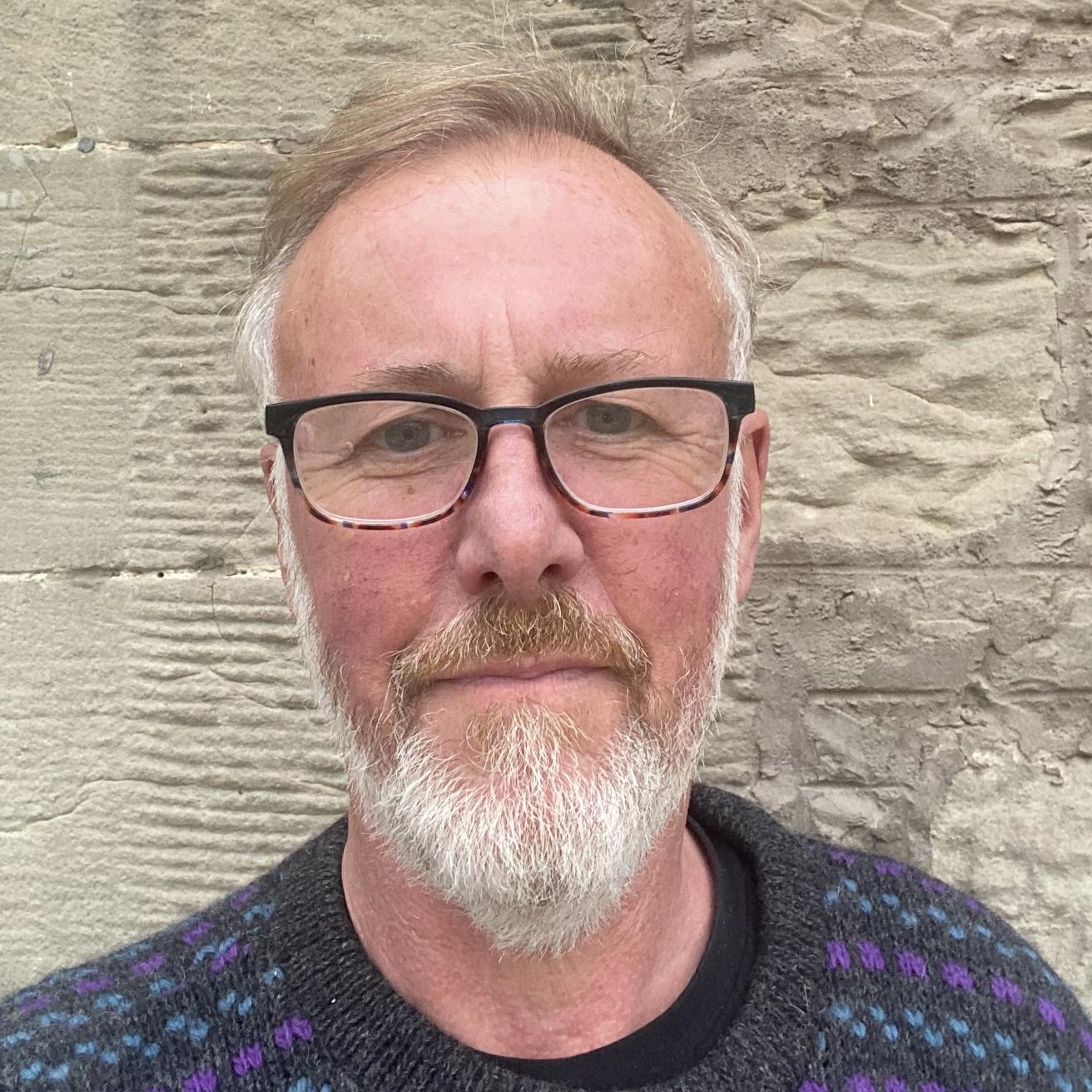
| Affiliation | Telephone |
|---|---|
| Professor (Late Medieval History) in the Department of History | +44 (0) 191 33 44343 |
| Co-Director (Skills, Training and Continuing Professional Development) in the Institute of Medieval and Early Modern Studies |
Biography
I came from a languages and literature background (at Edinburgh University) and so have always been interested in literary sources and the study of language as ways of understanding the past. It helps me to think of texts as ‘situated uses of language’ which can be approached in a number of ways – as material objects, as texts within paratexts, as examples of/ variants upon genres, as sites of intertexuality, as the subject of reception histories and so forth. The first history book I read which engaged deeply with literary sources was Johan Huizinga’s study of forms of life and thought in Burgundy and France in the fourteenth and fifteenth centuries, Autumntide of the Middle Ages, one of the most influential works written on late medieval history and a good candidate to be the biggest-selling work of medieval history of all time. Huizinga’s return to prominence as a founding figure in cultural history and the history of emotions, as well as a major figure in western historiography, is something I have contributed to and engaged with in different ways over my course of my career. While in sympathy with Huizinga’s methods, I have also brought codicology, textual editing, prosopography, handwritten text recognition and other methods to bear in my work. Burgundy itself has long attracted medieval historians, perhaps because it did not become a middle power in Europe and its legacy was scattered through many successor states; doubtless, too, because of the enduring imprint it left on the visual, material and literary culture of Europe as a whole. Historians have tried to view it through various lenses such as state formation, lordship, political unions and composite monarchies. I have tried to concentrate on its political and historical culture, taking account of powerful interest groups beyond the ducal elite in the great cities of the Low Countries and among the nobility of the Low Countries and further afield within the Kingdom of France. From this work, which often looks at history through literary sources, related projects in material culture and language have emerged (see below).
Teaching and Learning
I have a wide range of teaching and learning experience from full-time employment at the universities of Edinburgh (1989-90), Newcastle (1990-92), Keele (1992-95), Glasgow (1995-2012) and Durham (2012-). I am especially interested in teaching sources, methods, concepts and historiography. I have worked in very different learning environments as a summer school teacher (Bern, Cambridge, Groningen, Uppsala), visiting lecturer/professor (Dijon, Ghent, Louvain-la-Neuve, Pau), and also as a 'lecteur d'anglais' at Caen University (1985-86) teaching English to French undergraduates.
I have facilitated teaching and learning throughout my career, convening/directing every level of study in my discipline from first-year to PhD, and I am currently co-directing Durham's interdisciplinary MA in Medieval and Early Modern Studies which I relaunched in 2020. I was Head of History at Glasgow during a period of ‘schoolfication’ and curriculum redesign (2010-12), and have also served as an acting head (2004) or deputy head (2009-10, 2024-). In these roles, and in my current position as Director of People and Workplace Culture, I have sought to create a rewarding, inclusive, fair and progressive environment for teaching and learning. I chaired the overall exam board of Durham's Common Awards programme, a national framework for Theological Education Institutions offering undergraduate degrees and diplomas (2013-16), and have served as a complaints and appeals investigator at the highest institutional level over many years. I have been a team member in teaching and learning reviews of departments and institutes at Durham and internationally, and a UG/PGT external examiner at Edinburgh, Lancaster, Cardiff and UEA.
Current or recent Modules:
HIST1702 Making History
HIST1641 Decline and Crisis in Late Medieval Europe
HIST1741 Medieval Worlds
HIST21P1 Records, Archives and Power in the Middle Ages
HIST2321 Inventing France, 1300-1500
HIST3403 The Princely Court in Late Medieval Europe
HIST46615 Things that Matter: Material Culture in/for the Digital Age
HIST46115 Grant-Writing for Masters Students
HIST42430 Power and Society in the Middle Ages
ARTS41030 Understanding the Medieval and Early Modern Past
Esteem Indicators
2025 External assessor, Dutch Research School for Medieval Studies (https://medievalstudies.nl/)
2025 External assessor, History Institute, University of Leiden
2024 Academic Lead (Durham) for BA Early Career Researcher Network, regional delivery partnership (https://www.thebritishacademy.ac.uk/early-career-researcher-network/)
2023 Visiting professor, University of Pau-Pays de l’Adourne
2023 External panelist, University of Lille III, UMR8529 (‘The politics of the domestic in late medieval and early modern Europe’)
2022 External panelist, Johannes Gutenberg-Universität Mainz (https://flag-project.uni-mainz.de/)
2021 Keynote lecturer, Fédération des cercles d’archéologie et d’histoire de Belgique (https://acfhab.be/)
2019 Gold Standard Letter for ‘outstanding contribution to the activities of the AHRC’
2019 Guest speaker, IFK Vienna (https://www.ifk.ac.at/kalender-detail/huizinga-heute-hundert-jahre-herbst-des-mittelalters.html)
2019 External panelist, University of Amsterdam (https://www.nwo.nl/en/projects/360-50-100)
2018 External assessor, Groningen Institute for the Study of Culture (https://www.rug.nl/research/icog/)
2017 External assessor, Lecky Chair of Medieval History, Trinity College Dublin
2017 External panelist, University of Leuven (‘Bottom-up initiatives in the making of late medieval urban poltics’)
2016 Guest speaker, Columbia University-Dutch Embassy, New York (Rereading Huizinga)
2016 External assessor, Lectureship, University of Antwerp
Research interests
- My main current interest is in urban records of Britain and Ireland, seen through the lens of the social history of the archive. This work stems from earlier research on similar materials in the Low Countries and France. With my collaborator, William Hepburn, I have proposed integrating methods from the field of material culture in the study of urban records (all the more important as digital methods develop), and I am investigating the adoption of paper in record-making and use – something which, despite the availability of this material and its many affordances in Britain and Ireland, occurred at a relatively late stage.
- A second strand of current research concerns language use and history-writing. A recent major research project led by the late Simon Gaunt demonstrated how much the spread of French across medieval Europe owed to the medium of history-writing. I have long been intrigued by the fact that this phenomenon originated, not in centres of French royal power, but in England and Flanders, and remained regionally dominant there as a cultural form into the later Middle Ages, especially in the Low Countries. Using quantitatve codicological methods I have mapped the phenomenon and have begun to trace a number of socio-linguistic forces I believe were at work.
- Finally, textual editing has figured among my publications and I continue to work in that area, my main interest being the chronicler George Chastelain, one of the most important narrative sources in the fifteenth-century Francophone world. My collaborator at Durham is David Cowling. I have led sessions on this work in the Late Medieval France and Burgundy seminar I co-founded with colleagues at Leeds and York.
- Facilitating research has been a feature of my career. At postgraduate level I designed training to help new applicants get a foothold on the funding ladder. I have been responsible for developing PGR supervision, training and funding at departmental level (e.g. implementing the first AHRC BGP at Glasgow), Faculty (as Deputy Dean responsible for PGT and PGR, 2013-16) and as one of the Academic Directors of the AHRC ‘Northern Bridge’ consortium (2013-14, 2021-22). I was Research Director at Glasgow in the run-up to RAE2008, in which History at that institution came joint seventh in the UK by average ranking. I have been a peer (2014-25) and strategic (2014-16) reviewer for AHRC, and have reviewed grants for several funding agencies in Europe. I have led or participated in the supervision of 16 successful PhD projects with a further six in progress, and I have examined PhD candidates for their degrees in the UK, Australia, Belgium, the Netherlands and Spain. Continuing professional development beyond the highest levels of university study is an interest of mine, particularly now that aspects of training and skills are so linked to AI and, conversely, are under threat as staff retire. I am co-director of skills and training, including CPD, in Durham's Institute of Medieval and Early Modern Studies.
Publications
Authored book
- The Cent Nouvelles nouvelles (Burgundy-Luxembourg-France, 1458 - c. 1550): Text and Paratext, Codex and ContextSmall, G., Gameson, R., Wijsman, H., Beth Winn, M., Perez-Simon, M., Velissariou, A., Roger, G., Davies, P. V., & de Blieck, E. (2023). The Cent Nouvelles nouvelles (Burgundy-Luxembourg-France, 1458 - c. 1550): Text and Paratext, Codex and Context. Brepols Publishers. https://doi.org/10.1484/m.tcc-eb.5.118224
- De flamische Bilderchronik Philipps des Schonen/ The Flemish Chronicle of Philip the fair/La Chronique flamande de Phillipe le BeauFronska, J., Wiijsman, H., & Small, G. (2015). De flamische Bilderchronik Philipps des Schonen/ The Flemish Chronicle of Philip the fair/La Chronique flamande de Phillipe le Beau. Lucerne.
- Late Medieval FranceSmall, G. (2009). Late Medieval France. Palgrave Macmillan.
- Court and civic society in the Burgundian Low Countries c. 1420-1530Small, G., & Brown, A. (2007). Court and civic society in the Burgundian Low Countries c. 1420-1530. MUP.
- George Chastelain and the shaping of Valois Burgundy. Political and historical culture at court in the fifteenth century * NB A paperback edition of this book came out in 2011Small, G. (1997). George Chastelain and the shaping of Valois Burgundy. Political and historical culture at court in the fifteenth century * NB A paperback edition of this book came out in 2011. Boydell Press.
Chapter in book
- Epilogue: from Herfsttij to AutumntideSmall, G. (2020). Epilogue: from Herfsttij to Autumntide. In G. Small, A. van der Lem, & translated by D. Webb (Eds.), in Autumntide of the Middle Ages. A study of forms of life and thought of the fourteenth and fifteenth centuries in France and the Low Countries. By Johan Huizinga (pp. 538-79). Leiden: Leiden University Press.
- The Making of the Autumn of the Middle Ages I: Narrative Sources and Their Treatment in Huizinga's HerfsttijSmall, G. (2019). The Making of the Autumn of the Middle Ages I: Narrative Sources and Their Treatment in Huizinga’s Herfsttij. In P. Arnade & M. Howell (Eds.), Rereading Huizinga: Autumn of the Middle Ages, a Century Later. Amsterdam University Press.
- French Politics during the Hundred Years WarSmall, G. (2019). French Politics during the Hundred Years War. In The Hundred Years War Revisited (pp. 33-56). Bloomsbury Publishing Plc. https://doi.org/10.5040/9781350494664.ch-002
- Town and crown in late fifteenth-century France: Rouen after the Réduction, c. 1449-1493Murphy, N., & Small, G. (2018). Town and crown in late fifteenth-century France: Rouen after the Réduction, c. 1449-1493. In A. Curry & V. Gazeau (Eds.), La guerre en Normandie (XIe-XVe siècle) (pp. 309-331). Presses universitaires de Caen.
- Speech acts and political communication in the Estates General of Valois and Habsburg Burgundy, c. 1370-1530Dumolyn, J., & Small, G. (2018). Speech acts and political communication in the Estates General of Valois and Habsburg Burgundy, c. 1370-1530. In M. Damen, J. Haemers, & A. Mann (Eds.), Political representation. Communities, ideas and institutions in Europe (c. 1200-c.1690) (pp. 240-266). Brill Academic Publishers. https://doi.org/10.1163/9789004363915_014
- ‘The Scottish court in the fifteenth century: a view from Burgundy’Small, G. (2013). ‘The Scottish court in the fifteenth century: a view from Burgundy’. In W. Paravicini (Ed.), La cour de Bourgogne et l’Europe. Le rayonnement et les limites d’un modèle culturel (pp. 456-474). Thorbecke Jan Verlag.
- Municipal registers of deliberations in the late Middle Ages: cross-Channel comparisonsSmall, G. (2007). Municipal registers of deliberations in the late Middle Ages: cross-Channel comparisons. In J. Genet & F. Ruggiu (Eds.), Les idées passent-elles La Manche?: Savoirs, représentions, pratiques (X-XXe siècles) (pp. 37-66). Presses universitaires de la Sorbonne.
- ‘Robert Campin et la “révolution démocratique” de Tournai: contextes politiques, socio-économiques et culturels’Small, G. (2007). ‘Robert Campin et la “révolution démocratique” de Tournai: contextes politiques, socio-économiques et culturels’. In L. Nys & D. Vanwijnsberghe (Eds.), Campin in context (pp. 43-50). Valenciennes-Brussels: Presses universitaires de Valenciennes – Institut royale du patrimoine artistique.
- Of Burgundian dukes, counts, saints and kings (14 C.E. - c.1520)Small, G. (2006). Of Burgundian dukes, counts, saints and kings (14 C.E. - c.1520). In J. Boulton & J. Veenstra (Eds.), The ideology of Burgundy (pp. 151-94). Brill Academic Publishers. https://doi.org/10.1163/9789047418498_007
- ‘Local elites and “national” mythologies in the Burgundian dominions in the fifteenth century’Small, G. (2006). ‘Local elites and “national” mythologies in the Burgundian dominions in the fifteenth century’. In R. Suntrup & J. Veenstra (Eds.), Building the past/Konstruktion der eigenen Vergangenheit (pp. 229-45). Frankfurt: Fritz Lang.
- The centre, the periphery and the problem of power distribution in later medieval FranceSmall, G. (2000). The centre, the periphery and the problem of power distribution in later medieval France. In C. Allmand (Ed.), War, government and power in later medieval France (pp. 145-74). Liverpool UP.
- Chroniqueurs et culture historique au bas Moyen ÂgeSmall, G. (1996). Chroniqueurs et culture historique au bas Moyen Âge. In L. Nys & A. Salamagne (Eds.), Valenciennes au Moyen Âge (winning volume, Prix Roger van der Weyden, 1997) (pp. 271-96). Presses universitaires de Valenciennes.
- Les origines de la ville de Tournai dans les chroniques légendaires du bas moyen âgeSmall, G. (1993). Les origines de la ville de Tournai dans les chroniques légendaires du bas moyen âge. In J. Pycke & J. Dumoulin (Eds.), Les grands siècles de Tournai (12e-15e siècles) (pp. 81-113). Tournai/Louvain-la-Neuve: Casterman.
Edited book
- Piety and politics in Britain (14th-16th centuries) (Variorum reprints edition of the essays of the late Professor John A.F. Thomson, )Small, G. (Ed.). (2013). Piety and politics in Britain (14th-16th centuries) (Variorum reprints edition of the essays of the late Professor John A.F. Thomson, ).
- Le héros bourguignon. Épopée et histoire (XIVe-XVIe siècles)Small, G., Brown, A., & Cauchies, J. (Eds.). (2001). Le héros bourguignon. Épopée et histoire (XIVe-XVIe siècles). Brussels: Centre européen d’études bourguignonnes.
Journal Article
- Parole d'État et mémoire "collective" dan les pays bourguignons: les discours prononcés devant des assemblées représentatives (XVe - XVIe siècle)Small, G., & Dumolyn, J. (2012). Parole d’État et mémoire "collective" dan les pays bourguignons: les discours prononcés devant des assemblées représentatives (XVe - XVIe siècle). Publications du Centre Européen D’Etudes Bourguignonnes., 52, 15-28. https://doi.org/10.1484/j.pceeb.5.100776
- ‘For a long “Century of Burgundy”’Small, G. (2011). ‘For a long “Century of Burgundy”’. BMGN - Low Countries Historical Review, 26, 54-69.
- ‘The “Burgundian State” since Richard Vaughan’Small, G. (2002). ‘The “Burgundian State” since Richard Vaughan’. The Bulletin of the Society for Renaissance Studies, 19, 1-9.
- ‘Le Ju du Grand Dominé et du Petit: une moralité tournaisienne inédite du Moyen Âge tardif (fin XVe-début XVIe siècle). Étude et édition’Small, G., & Hindley, A. (2002). ‘Le Ju du Grand Dominé et du Petit: une moralité tournaisienne inédite du Moyen Âge tardif (fin XVe-début XVIe siècle). Étude et édition’. Revue Belge de Philologie et D’histoire, vol. 80, 413-56.
Presentation
- Essai sur la “septentrionalité” des origines et du développement de l’histoire et de la culture historique en langue française, c. 1135-1470Small, G. (2024). Essai sur la “septentrionalité” des origines et du développement de l’histoire et de la culture historique en langue française, c. 1135-1470 (J. Cauchies, Ed.). Sociétés d’histoire d’Ath, Mouscron et Tournai.
Scholarly Edition
- Autumntide of the Middle Ages. A study of forms of life and thought of the fourteenth and fifteenth centuries in France and the Low Countries. [Webb, Diane (translator)]Huizinga, J. (2020). Autumntide of the Middle Ages. A study of forms of life and thought of the fourteenth and fifteenth centuries in France and the Low Countries. [Webb, Diane (translator)] (G. Small & A. van der Lem, Eds.). Leiden University Press.