

Staff profile
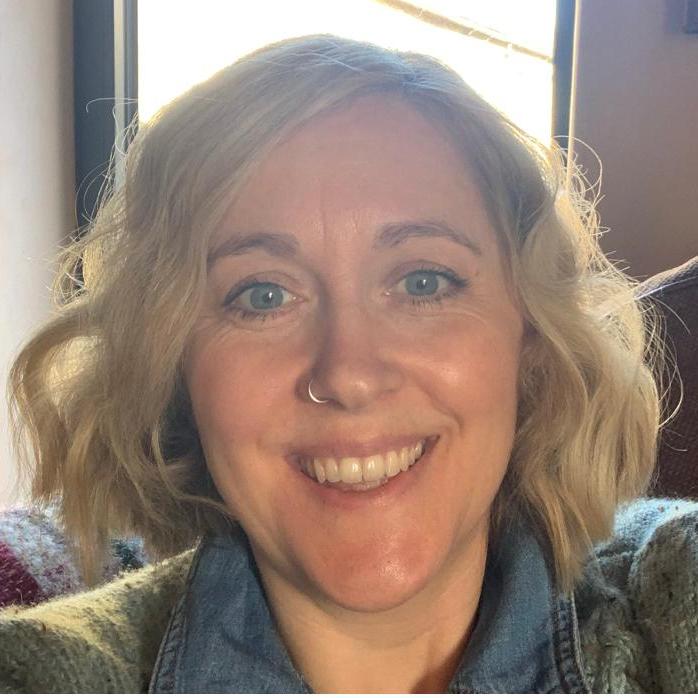
| Affiliation | Telephone |
|---|---|
| Assistant Professor in the School of Education |
Biography
I spent 15 years teaching in primary schools across Yorkshire, during which time I held the position of Executive Deputy Headteacher and achieved my National Professional Qualification for Headship (NPQH).
Following my work in schools, I became a Teaching for Mastery Lead for a Maths Hub and a member of a Trust School Improvement Team. I was subsequently appointed as Curriculum Development Project Lead for a Local Authority. Throughout this period, I was also an associate member of the primary team at the National Centre for Excellence in the Teaching of Mathematics (NCETM), where I designed, led, monitored and evaluated both local and national professional development workshops.
I joined Durham University's School of Education in 2020 as an Assistant Professor.
I am currently Programme Director for BA Education and Primary PGCE within the School of Education, teaching across the PGCE and BA Primary Education programmes. I lead the primary mathematics team and Intensive Training and Practice (ITAP) provision. I am also the Pastoral Cohort Lead for Primary PGCE and BA Year 3 trainees. In addition, I contribute to mathematics outreach work with schools and local authority.
I am passionate about participant-centred learning. This interest developed during my work in the Local Authority, where I explored innovative approaches to engaging teachers and headteachers in professional learning. My role as Programme Director provides opportunities to continue investigating how we actively engage participants in their learning.
Research Interests
Mixed-age classes
I have always been fascinated by mixed-age schools and believe strongly in the important role that small schools play within their communities. However, I have identified a relative lack of research into the nature of effective teaching and learning in mixed-age classrooms. I aim to develop and extend research into the mathematical and pedagogical approaches that support effective teaching in these settings. I have worked with the NCETM to design a tool and collaborated with school partners to plan and deliver mathematical content effectively across mixed-age classes.
Greater depth in primary mathematics
I am interested in developing a deeper understanding of what greater depth in primary mathematics means and, importantly, how it can be recognised and developed through teaching. My interest focuses on how teachers can plan learning experiences that move beyond procedural fluency to develop pupils' mathematical reasoning, connections, generalisation and justification. I am particularly interested in the role of questioning in eliciting and extending pupils' mathematical thinking, and how teachers can recognise evidence of greater depth in pupils' responses, explanations and approaches to problem-solving. I aim to explore how questioning can create opportunities for all pupils to develop a deeper, more connected and flexible understanding of mathematics.
‘Questioning in the now’
My current research explores the role of direct feedback as a pedagogical tool in the primary classroom, exploring the perspectives of both practitioners and pupils.
Research interests
- Mixed age classes -I have always been fascinated by mixed-age schools, and believe in the importance of the role small schools play in their communities. However, I have found that there has been limited research into the nature of effective teaching in mixed-age classrooms. I aim to build and further pursue the mathematical and pedagogical research in this area. Currently I am working alongside school partners to plan and deliver mathematical content effectively across mixed-age classes.
- Mastery in primary mathematics -I am currently exploring evidence of greater depth in mathematics in pupils’ responses, and the role of questioning to check pupils’ knowledge systematically
- Questioning in the now -I am currently investigating the role of direct feedback as a pedagogical tool in the primary classroom from the perspective of practitioners and pupils.