

Staff profile
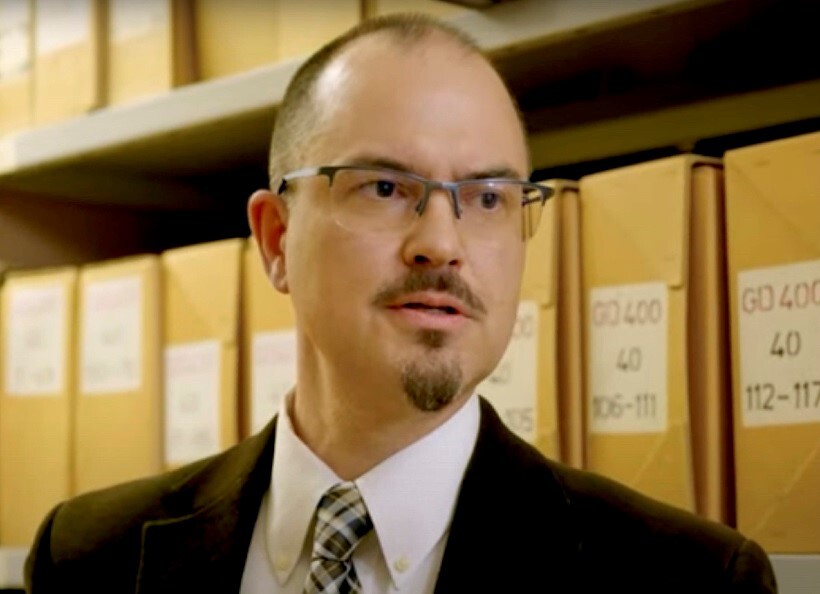
Professor Matthew Daniel Eddy
Professor / Chair in the History and Philosophy of Science/ Co-Director Institute of Medieval and Early Modern Studies/ Co-Director Centre for Global Histories of Medicine, Disease and Health / Nat Science Advisor and Exam Board Rep
| Affiliation |
|---|
| Professor / Chair in the History and Philosophy of Science/ Co-Director Institute of Medieval and Early Modern Studies/ Co-Director Centre for Global Histories of Medicine, Disease and Health / Nat Science Advisor and Exam Board Rep in the Department of Philosophy |
| Department Rep (Philosophy - Early Modern) in the Institute of Medieval and Early Modern Studies |
| Professor in the History and Philosophy of Science in the Durham CELLS (Centre for Ethics and Law in the Life Sciences) |
| Fellow of the Institute for Medical Humanities |
Biography
Contact
Office Hours: Wednesdays 10:00-13:00 during Michaelmas and Epiphany terms. By appointment for Easter Term. My email is m.d.eddy[at]durham.ac.uk. Meetings are held in the Department of Philosophy, 50-51 Old Elvet, DH1 3HN.
Social Media: Bluesky
Profile
I am a historian of the natural sciences and medicine in Britain and its former empire from 1600 onward. I did my postgraduate work in Princeton, Durham and Berlin and then worked at MIT, Caltech and the Max Planck Institute for the History of Science (MPIWG). I am now Durham University's Chair and Professor in the History and Philosophy of Science and a director of the Centre for the Global Histories of Medicine, Disease, and Health. I also have served as Co-Director of Durham's Institute for Medieval and Early Modern Studies and I am a member of the Harvard-based Global Information History research collective.
My early research addressed Enlightenment medicine and the experimental sciences and then I expanded into cognition and the human sciences. My current work focuses on colonial biostatistics. My recent book, Media and the Mind: Art, Science, and Notebooks as Paper Machines, 1700-1830 (Chicago: 2023), won the Pickstone Prize and was shortlisted for the SHARP prize in book history. My first book, The Language of Mineralogy: John Walker, Chemistry and the Edinburgh Medical School, 1750-1800 (Routledge: 2008/2016), was shortlisted for the Neville Prize. I currently have two research projects: Moral Data: Subaltern Doctors and Global Health Statistics, 1800 to 1870, and Materiality for Mortals: Medicine and the Birth of the Biochemical Body during the Scottish Enlightenment.
I've held research fellowships at Harvard University, MPIWG, UCLA, the Huntington Library, the Science Heritage Foundation, Uppsala University and Cambridge University. I am a Fellow of the Royal Historical Society. My research has been supported by grants awarded by the British Arts and Humanities Research Council, the Wellcome Trust, the Mellon Foundation, the Swedish Riksbankens Jubileumsfond and the Royal Society of London.
Over the years my research has been profiled by Inside Higher Ed, the BBC, The Scotsman, Yahoo News and Apple News. I have acted as a historical consultant for several BBC documentaries and for educational outreach initiatives organised by institutions such as the Royal Society, the Down House trust and museum (the former home of Charles Darwin) and the Beniba Centre for Slavery Studies in Glasgow.
I've also served on the executive council of the British Society for the History of Science, given evidence to the UK's Department of Work and Pensions and acted as an evaluator for Greece's National Hellenic Quality Assurance Agency for Higher Education. I sit on the editorial boards of Notes and Records of the Royal Society of London, History of the Human Sciences and History of Education.
Teaching and Supervision
I teach undergraduate and MA modules on the history and ethics of science, medicine and technology (including data science) for Year 1, 2, 3 and 4 students. If you are interested in taking one of these modules, please be in touch. I also regularly supervise Year 3, Diploma and MA dissertations and welcome enquiries. Recent topics I've supervised addressed a diverse range of historical subjects such as early modern AI, Enlightenment medicine and human nature, Victorian psychiatry and art, and Edwardian motherhood and Darwinian feminism.
For students interested in a Research MA or PhD, I supervise theses on the history of the natural sciences and medicine from the seventeenth to early twentieth centuries. The research topics of my current PhD students are given at the bottom of this page. I'm happy to hear from prospective students interested in MA or doctoral thesis supervision.
Note for natural science students - The history of science, medicine and technology modules I teach with the Science and Medicine Studies cluster are included in the natural sciences programme regulations. I serve as the director of natural science students for the cluster. If you have questions relating to enrolment or the content of the modules please contact me for guidance.
Publications
Monographs
Media and the Mind: Art, Science, and Notebooks as Paper Machines, 1700-1830 (Chicago: University of Chicago Press, 2023), 550 pp + 120 figures.
* Winner of the British Society for the History of Science Pickstone Prize, awarded to the best scholarly book in the history of science and its cultural influences.
* Finalist for the Society for the History of Readership, Authorship and Publishing Prize, awarded to the best book in book history.
The Language of Mineralogy: John Walker, Chemistry, and the Edinburgh Medical School, 1750-1800 (London: Routledge, 2008 hardback; 2016 paperback), xx + 332 pp.
* Finalist for the Chemical Heritage Foundation’s Neville Prize.
Edited Volumes
1. Dialogues on Chemistry between a Father and His Daughter (Taylor and Francis: forthcoming, 2027). Annotated reproduction and interpretive essays about an 1801 manuscript conduct book about the moral, medical and environmental foundations of experimental science during the 1790s. Written by the Scottish experimentalist James Keir and edited by his teenage daughter Amelie Keir.
2. Scientific Instructions and Colonial Information, 1650-1850, co-edited with Linda Andersson Burnett and Maria Florutau (forthcoming 2027) Special issue of the British Journal of the History of Science addressing scientific and medical technologies of instruction and communication in the colonial contexts of Asia, Africa and Europe.
3. Gender, Science and Sociability in the Diary of Jane Ewbank of York (1770-1824), co-edited with Jane Rendall and Rachel Feldberg (Woodbridge: Boydell Press and British Society for Eighteenth Century Studies, 2026).
4. A Cultural History of Chemistry in the Eighteenth Century, Co-edited with Ursula Klein (London: Bloomsbury, 2022, hardback; 2025, paperback). Volume 4 out of Bloomsbury’s A Cultural History of Chemistry, Volumes 1-6. The entire series was named one of the Choice Outstanding Academic Titles for 2023, the only edited series to be given the award.
5. Chemical Knowledge in the Early Modern World (Chicago: University of Chicago, 2014); Volume 29 in the History of Science Society’s Osiris series. Co-edited with William R. Newman and Seymour Mauskopf.
6. Prehistoric Minds: Human Origins as a Cultural Artefact, 1780-2010, Special Issue, Notes and Records of the Royal Society (London: Royal Society Publishing, 2011).
7. William Paley's Natural Theology: or, Evidences of the Existence and Attributes of the Deity (Oxford: Oxford University Press, 2006), Co-edited with David M. Knight. Reprinted numerous times. The Chinese translation [自然神学] with my OUP introduction and annotations (20,000 words) about the book’s medical and scientific context will appear with Beijing's Commercial Press [商务印书馆] in March 2027.
8. Science and Beliefs: From Natural Philosophy to Natural Science, 1700-1900 (London: Routledge, 2005 hardback, 2017 paperback), Co-edited with David M. Knight.
Articles and Book Chapters
1. ‘The Bureaucracy of Bias: Colonialism, Epidemiology and William Fergusson’s Statistical Re-Interpretation of Government Instructions in Sierra Leone, 1825-1830’, British Journal for the History of Science, forthcoming 2027.
2. ‘The Medical Topography of Empire: Climate, Health and J. A. B. Horton’s Data Strategies in British West Africa’, Medical History, forthcoming 2027.
3. ‘The Moral Doctor: Datafication, Activism and the Early Medical Career of James McCune Smith in Late Georgian Scotland’, American Historical Review, (2026), in press. [Link]
4. ‘“A Very Curious Subject”: Jane Ewbank, Public Lectures and Experimental Philosophy in York during the Early 19thCentury’, in Matthew Daniel Eddy, Jane Rendall and Rachel Feldberg (Eds.), Gender, Science and Sociability in the Diary of Jane Ewbank of York (1770-1824), (Woodbridge: Boydell Press and British Society for Eighteenth Century Studies, 2026), 114-138.
5. ‘The World of Jane Ewbank: Rethinking the Gendered, Scientific and Sociable Context of a Yorkshire Diarist’, (with Jane Rendall and Rachell Feldberg), in Eddy, Rendall and Feldberg (2026), 3-23.
6. ‘Life of Jane Ewbank (1778-1824)’, (with Jane Rendall and Rachell Feldberg), in Eddy, Rendall and Feldberg (2026), 24-27.
7. ‘Dr Archibald Hewan (1832-1883) and the University of Glasgow’s Medical Libraries’, (with Robert Maclean and Emma Yan), Journal of the Royal College of Physicians of Edinburgh, 55 (2025), 1-10. [Link]
8. ‘Society, Environment and the Chemistry and Daily Life during the Eighteenth Century’, in Matthew Daniel Eddy and Ursula Klein (Eds.), A Cultural History of Chemistry in the Eighteenth Century (London: Bloomsbury, 2022), 113-135.
9. ‘The Core Concepts and Cultural Context of Eighteenth-Century Chemistry’, (with Ursula Klein), in Matthew Daniel Eddy and Ursula Klein (Eds.), A Cultural History of Chemistry in the Eighteenth Century (London: Bloomsbury, 2022), 1-21.
10. ‘New Discovery Reveals How First African American Doctor Fought for Women’s Rights in Glasgow’, The Conversation, 8 October 2021. [Link]. Over 150,000 reads/downloads. Republished as: feature articles by Apple News, Yahoo News, Florida News Times, Today News, Western Morning News, and Glasgow Live; and as a learning resource by Teaching Social Studies Journal (New Jersey Council for the Social Studies) [Link].
11. ‘Diagrams’, in Anthony Grafton, Ann Blair and Anja Sylvia Goeing (Eds.), Information: A Historical Companion (Princeton: Princeton University Press, 2021), 397-401.
12. ‘Family Notebooks, Mnemotechnics and the Rational Education of Margaret Monro’, in Carla Bittel, Elaine Leong and Christine von Oertzen (Eds.), Working with Paper: Gendered Practices in the History of Knowledge (Pittsburgh: University of Pittsburgh Press, 2019), 160-176, 269-272.
13. ‘The Nearness of the Past: Remembering the Life and Ideas of David Marcus Knight (1936-2018)’, Royal Society of Chemistry Historical Group Newsletter, 75 (2019), 8-15.
14. ‘The Nature of Notebooks: How Enlightenment Schoolchildren Transformed the Tabula Rasa’, Journal of British Studies, 57 (2018), 275-307.
15. ‘Childmade Evidence: A Reflection on the Sources Used to Historicise Childhood’, Insights, Vol. 10, No. 15, (2018), 1-10.
16. ‘The Politics of Cognition: Liberalism and the Evolutionary Origins of Victorian Education’, British Journal for the History of Science, 50 (2017), 677-699. BJHS article with the highest number of downloads in 2018.
17. ‘The Interactive Notebook: How Students Learned to Keep Notes During the Scottish Enlightenment’, Book History, 19(2016), 87-131. Praised as a breakthrough study by Scott McLemee, ‘Notable History’, Inside Higher Ed, 22 June 2016.
18. ‘The Cognitive Unity of Calvinist Pedagogy in Enlightenment Scotland’, in Ábrahám Kovács (Ed.), Reformed Churches Working Unity in Diversity: Global Historical, Theological and Ethical Perspectives (Budapest: L’Harmattan, 2016), 46-60.
19. ‘The Child Writer: Graphic Literacy and the Scottish Educational System’, History of Education, 45 (2016), 695-718.
20. ‘Useful Pictures: Joseph Black and the Graphic Culture of Experimentation’, in Robert G. W. Anderson (Ed.), Cradle of Chemistry: The Early years of Chemistry at the University of Edinburgh (Edinburgh: John Donald Publishers, 2015), 99-118.
21. ‘How to See a Diagram: A Visual Anthropology of Chemical Affinity’, Osiris, 26 (2014), 178-196.
22. ‘An Introduction to Chemical Knowledge in the Early Modern World’, (With Seymour H. Mauskopf and William R. Newman), Osiris, 26 (2014), 1-15.
23. ‘Nineteenth-Century Natural Theology’, in Russell Re Manning (ed.), Oxford Handbook of Natural Theology (Oxford: Oxford University Press: 2013), 100-117. Singled out as an outstanding essay in Notre Dame Philosophical Reviews.
24. ‘The Shape of Knowledge: Children and the Visual Culture of Literacy and Numeracy’, Science in Context, 26 (2013), 215-245.
25. ‘Natural History, Natural Philosophy and Readership’, in Stephen Brown and Warren McDougall (eds.), The Edinburgh History of the Book in Scotland, Vol. II: Enlightenment and Expansion, 1707-1800 (Edinburgh: University of Edinburgh Press, 2012), 297-309.
26. ‘The Prehistoric Mind as a Historical Artefact’, Notes and Records of the Royal Society, 65 (2011), 1-8.
27. ‘The Line of Reason: Hugh Blair, Spatiality and the Progressive Structure of Language’, Notes and Records of the Royal Society, 65 (2011), 9-24.
28. ‘The Alphabets of Nature: Children, Books and Natural History in Scotland’, Nuncius: Journal of the Material and Visual History of Science, 25 (2010), 1-22.
29. ‘The Sparkling Nectar of Spas: The Medical and Commercial Relevance of Mineral Water’, in Ursula Klein and Emma Spary (eds.), Materials and Expertise in Early Modern Europe: Between Market and Laboratory (Chicago: The University of Chicago Press, 2010), 198-226.
30. ‘Tools for Reordering: Commonplacing and the Space of Words in Linnaeus’s Philosophia Botanica’, Intellectual History Review, 20 (2010), 227-252.
31. ‘The Dark Side of Collecting: Early Modern Chemistry, Humanism and Classification’, Ambix, 55 (2008), 283-292.
32. ‘An Adept in Medicine: Rev. Dr. William Laing, Nervous Complaints and the Commodification of Spa Water’, Studies in the History and Philosophy of the Biological and Biomedical Sciences, 39 (2008), 1-13.
33. ‘Joseph Wright of Durham’s A New Theory of the Earth’, in Richard Gameson and Sheila Hingley (eds.), Durham Treasures(London: Third Millennium Publishing, 2007), 122-123.
34. ‘The Aberdeen Agricola: Chemical Principles and Practice in James Anderson’s Georgics and Geology’, in Lawrence M. Principe (ed.), New Narratives in Eighteenth-Century Chemistry (Dordrecht: Springer, 2007), 139-156.
35. ‘Photographic Essay on Joseph Wright of Durham’s Terrestrial Theories’, History of Science Society Newsletter, October 2007, Vol. 36, No. 4, 23-32.
36. ‘The Medium of Signs: Nominalism, Language and Classification in the Early Thought of Dugald Stewart’, Studies in the History and Philosophy of Biological and Biomedical Sciences, 37 (2006), 373-393.
37. ‘Academic Capital, Postgraduate Research and British Universities: A Bourdieu Inspired Reflection’, Discourse, 6 (2006), 211-223.
38. ‘“The Fabric of the Globe”: Chemistry and Geology in Enlightenment Edinburgh’, Chemical Heritage, 24 (2006), 4-7; 36-38.
39. ‘Set in Stone: The Medical Language of Mineralogy in Scotland’, in David Knight and Matthew D. Eddy (eds.), Science and Beliefs: From Natural Philosophy to Natural Science, 1700-1900 (Aldershot: Ashgate: 2005), 77-94.
40. ‘Scottish Chemistry, Classification and the Late Mineralogical Career of the “Ingenious” Professor John Walker’, British Journal for the History of Science, 37 (2004), 373-399.
41. ‘Elements, Principles and the Narrative of Affinity’, Foundations of Chemistry, 6 (2004), 161-175.
42. ‘The Science and Rhetoric of Paley’s Natural Theology’, Literature and Theology, 18 (2004), 1-22.
43. ‘The University of Edinburgh Natural History Class Lists’, Archives of Natural History, 30 (2003), 97-117.
44. ‘Scottish Chemistry, Classification and the Early Mineralogical Career of the “Ingenious” Rev. Dr. John Walker’, British Journal for the History of Science, 35 (2002), 411-438.
45. ‘Orientations to the History of Science and Natural Theology in Britain’, Borderlands, 1 (2002), 42-44, 58.
46. ‘The Doctrine of Salts and Rev. John Walker’s Analysis of a Scottish Spa’, Ambix, 48 (2001), 137-160.
47. ‘Geology, Mineralogy and Time in John Walker’s University of Edinburgh Natural History Lectures’, History of Science, 39(2001), 95-119.