

/filters:quality(70)/prod01/prodbucket01/media/durham-university/alumni-/page-header-banners/News-Banner.png)
Alice Oseman: the power of human connection and looking forward to a completely blank page

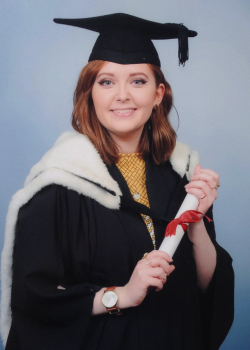
At just 32 years old, author, illustrator and screenwriter Alice Oseman (English Literature, St John’s College, 2013-2016) has built an exceptional career.
Solitaire, Alice’s debut novel, was written before leaving school and published during the first year at Durham. A second novel, Radio Silence, followed, before work began on the Heartstopper webcomic and graphic novel series during the final year of study. The series concluded in 2026. Heartstopper was adapted into three critically acclaimed Netflix seasons between 2022 and 2024, and the final volume, Heartstopper Forever, was recently released as a film (2026).
Heartstopper has been acclaimed not only as a publishing and screen success, but also for its positive social impact. Through its authentic portrayal of LGBTQ+ identities, relationships and mental health, the series has helped promote representation, understanding and self-acceptance among young people worldwide. By foregrounding hope and friendship, Heartstopper has played an important role in broadening mainstream perceptions of LGBTQ+ experiences.
Born in Kent, Alice studied English Literature at Durham, was a member of St John’s College, and graduated in 2016. To learn more about the creative journey behind this remarkable body of work, we caught up with Alice to reflect on career milestones and look to the future.
 How do you feel that your work has evolved before, during and after university?
I wrote my first book, Solitaire, before I attended university and my second, Radio Silence, while I was there. I began making Heartstopper the year I graduated. I think my works have always been very influenced by where I was at that moment in my life! My earlier works are very influenced by school life and academia, while my later works, written post-university, have more focus on other themes. I've always used writing to unpack and process the world around me.
If you could share one piece of advice for current students or new graduates working toward a career in fiction, what would that be?
Write what you'd like to read. Try not to worry about what other people might think of it, whether it'd be trendy or universal or accessible, because as long as you love it, then there will be others out there who would love it too. And don't be afraid to put your work out there earnestly and sincerely.
How do you approach the creation of characters with a range of different identities and experiences?
It'll be easier to write different characters if you're reading and experiencing things outside of your own inner world. Read widely, watch TV and films, talk to people and have different experiences. A lot can be learned from simply listening.
What would you hope your readers will take away from your stories?
That really depends on the story! Ultimately, I'm happy with whatever readers would like to take away from my stories. But I think one of the common themes throughout my books is the power of human connection and how it can be a lifeline through any kind of dark or difficult time. So, I'd love for readers to take that thought into their own lives and always remember to reach out to others.
After the success of the Heartstopper series, what comes next?
I don't know! And I'm quite excited about that. I haven't had the opportunity to face a completely blank page in many years. I am very grateful to be in the position to go where the wind takes me, whether that's returning to prose, making more comics, doing more work in film/TV, or something entirely new. I guess time will tell!
Find out more:
- About the work of Alice Oseman
- Explore @aliceoseman on Instagram
- Watch Heartstopper and Heartstopper Forever on Netflix
- About our alumni community
Header image credit: Patch Studio
Durham University takes pride in the achievements and contributions of its 230,000 alumni and supporters. Stories that cite views, talks and published work reflect the individual's contribution in their personal or professional capacity and do not represent the University's position or endorsement.