

/filters:quality(70)/prod01/prodbucket01/media/durham-university/alumni-/page-header-banners/News-Banner.png)
New Leadership for three Durham Colleges
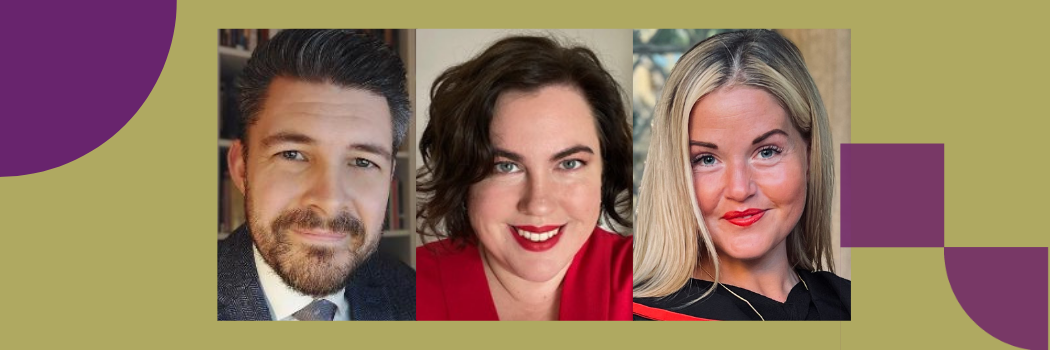
Summer 2026 has marked a moment of notable transition across three Durham colleges, with St Cuthbert’s Society, St Mary’s College, and Ustinov College each welcoming new leadership following the departure of longstanding principals.
On 31 July, Professor Tammi Walker (St Cuthbert’s Society, 2021-2026), Professor Adrian Simpson (St Mary’s College, 2022-2026), and Professor Glenn McGregor (Ustinov College, 2014-2026) stepped down from their posts. Their tenures were defined by dynamic leadership through periods of change, including the University’s recovery from the Covid‑19 pandemic, and by distinguished contributions within their academic fields: Forensic Psychology, Education, and Climatology respectively.
Following a competitive recruitment process, three colleagues have been appointed as heads of college for the 2026-27 academic year: Dr Matthew Mills, St Cuthbert’s Society; Kate Morrey, St Mary’s College; Sophie Holland, Ustinov College. All three previously served as vice‑principals within their respective communities and bring a rich blend of academic expertise, professional experience, and familiarity with collegiate life. As interim principals, as well as leading their colleges, they will be members of Senate, contributing to strategic projects and areas of work within the wider University.
St Cuthbert’s Society: Dr Matthew Mills
.png) A theologian and church historian, Matthew joined Durham in 2025 after academic and institutional leadership roles at Durham Cathedral and Oxford University (Regent’s Park College). At St Cuthbert’s, he has developed a distinctive enrichment offer in the form of ‘Evergreen’, a heritage‑based programme anchored in values of curiosity, creativity, and compassion. In 2026-27, he will be leading St Cuthbert’s contribution to the University’s inaugural flagship Joint Educational Initiative with Wuhan University and – a first-generation scholar himself – working with students to enhance engagement and participation. Matthew has held an honorary fellowship in the Department of Theology and Religion since 2021, and his recent publications include Forgiveness and Restorative Justice (Palgrave, 2021), Blessed Mary and the Monks of England (CUA Press, 2024), and Restorative Justice in the UK and China (Springer, 2026).
A theologian and church historian, Matthew joined Durham in 2025 after academic and institutional leadership roles at Durham Cathedral and Oxford University (Regent’s Park College). At St Cuthbert’s, he has developed a distinctive enrichment offer in the form of ‘Evergreen’, a heritage‑based programme anchored in values of curiosity, creativity, and compassion. In 2026-27, he will be leading St Cuthbert’s contribution to the University’s inaugural flagship Joint Educational Initiative with Wuhan University and – a first-generation scholar himself – working with students to enhance engagement and participation. Matthew has held an honorary fellowship in the Department of Theology and Religion since 2021, and his recent publications include Forgiveness and Restorative Justice (Palgrave, 2021), Blessed Mary and the Monks of England (CUA Press, 2024), and Restorative Justice in the UK and China (Springer, 2026).
St Mary’s College: Kate Morrey
.png) Kate studied History at University College, Durham, before embarking on a career teaching History and Politics across Tyne and Wear. She later held senior roles in schools and multi‑academy trusts, including as Director of Academic Progress. Returning to Durham in 2024 as Vice‑Principal of St Mary’s, Kate has strengthened St Mary’s volunteering and outreach work and helped establish programmes aimed at reducing financial barriers for students from lower‑income backgrounds. As Principal, Kate intends to focus on ensuring all members of the college community feel a sense of belonging to both the College and the wider University; additionally, leading the College Team in embedding St Mary’s Horizons Careers Programme to further prepare students for life beyond Durham.
Kate studied History at University College, Durham, before embarking on a career teaching History and Politics across Tyne and Wear. She later held senior roles in schools and multi‑academy trusts, including as Director of Academic Progress. Returning to Durham in 2024 as Vice‑Principal of St Mary’s, Kate has strengthened St Mary’s volunteering and outreach work and helped establish programmes aimed at reducing financial barriers for students from lower‑income backgrounds. As Principal, Kate intends to focus on ensuring all members of the college community feel a sense of belonging to both the College and the wider University; additionally, leading the College Team in embedding St Mary’s Horizons Careers Programme to further prepare students for life beyond Durham.
Ustinov College: Sophie Holland
.png) Sophie has held a range of student‑facing and leadership roles within the University and brings a clear vision for the future of Ustinov. Her focus is on cultivating an inclusive, ambitious, and globally connected postgraduate community; one where students feel they belong and have opportunities to thrive academically, socially, and professionally. She aims to strengthen partnerships across and beyond the University, enhance facilities and accommodation, and empower students to shape college life. Sophie’s ambition is for Ustinov to remain the University’s leading postgraduate college, recognised for diversity, innovation, and a supportive environment that enables every member to reach their full potential.
Sophie has held a range of student‑facing and leadership roles within the University and brings a clear vision for the future of Ustinov. Her focus is on cultivating an inclusive, ambitious, and globally connected postgraduate community; one where students feel they belong and have opportunities to thrive academically, socially, and professionally. She aims to strengthen partnerships across and beyond the University, enhance facilities and accommodation, and empower students to shape college life. Sophie’s ambition is for Ustinov to remain the University’s leading postgraduate college, recognised for diversity, innovation, and a supportive environment that enables every member to reach their full potential.
Together, these appointments mark a new chapter for three of Durham’s college communities. It promises to be shaped by respect for the college's distinctive – and distinguished – histories and oriented towards a future of continued excellence in the University's unique model of student experience.
Find out more:
- About our Colleges