/prod01/prodbucket01/media/durham-university/departments-/faculty-of-science-/general-pictures/71353.jpg)
Latest News
Durham and UK Atomic Energy Authority set out vision for new Fusion Centre
We are working with the UK Atomic Energy Authority (UKAEA), the UK Government body responsible for the development of fusion energy, to host an industry preview event for a proposed High-Temperature Superconductivity Centre of Excellence.

Durham researchers play key role in breast cancer study with AI-VISION
Scientists from our top-rated Physics Department are playing a key role in a new UK clinical study aimed at improving treatment for people with triple-negative breast cancer (TNBC), a fast-growing form of the disease.

Durham researchers involved in £4.2 million eye health research institute
Our researchers are part of a major new £4.2 million research institute that aims to transform how eye disease and wider health conditions are detected, prevented and treated.

Durham leads project to transform medicines, agrochemicals and other crystalline-based consumer products
A Durham-led research project has been awarded a grant from the Engineering and Physical Sciences Research Council (EPSRC) to revolutionise how molecular crystals are designed.

Scientists secure major award to drive sustainable consumer innovation
We have been awarded a share of more than £24 million of national funding for the prestigious Industrial Doctoral Landscape Award (IDLA) to advance research into sustainable consumer goods.

Global recognition for innovative teaching
The quality of teaching and learning that our students enjoy at Durham has been recognised at a global awards ceremony.

Leading the way in groundbreaking research
We have been ranked third in the UK for interdisciplinary science research.

Expertise informs Parliamentary report on space
Our research has informed a new Parliamentary report on how the UK can strengthen its position in the global space sector.

Seaweed study prompts water quality investigation
Research from our Department of Earth Sciences has identified the potential source of nitrogen pollution affecting a popular bathing area.

Children’s views could help shape better mask design
A new study from our Psychology Department has found that children’s views on the design and comfort of air pollution masks could be key to encouraging their regular use.

Commercially sourced wildflower seeds may threaten Britain’s native red campion
Scientists at from our Biosciences Department working with colleagues from the University of Liverpool, have discovered that shop-bought wildflower seeds may be putting Britain’s native plants at risk.

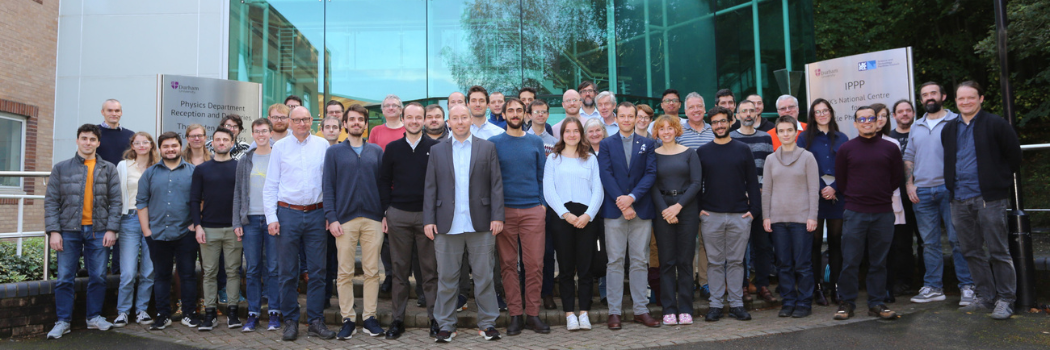
IPPP marks 25 years of world-leading particle physics research
Our Institute for Particle Physics Phenomenology (IPPP) will celebrate its 25th anniversary on 24-25 September, recognising a quarter-century of innovative research, global collaboration, and academic excellence.