


How are we COPing with the Silence at COP31
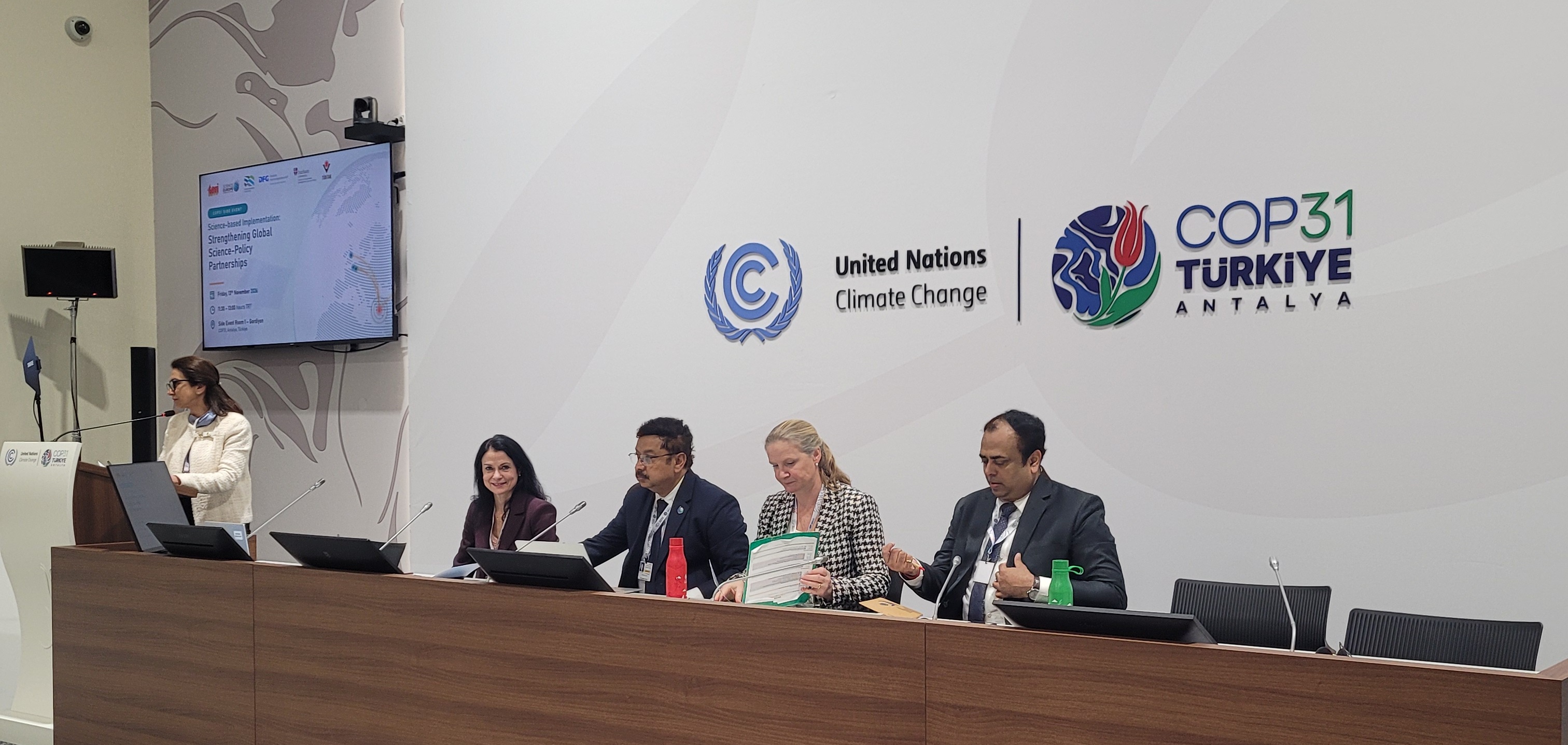
COP31 ended without an overarching political agreement, exposing deep divisions over fossil fuels, climate finance and the future direction of international climate action. This blog article considers what that silence means for the COP process and international climate law, and why existing legal obligations remain critical on the road to COP32.
Conferences of States Parties (COPs) are a form of action for the continuous process of multilateral treaty review and implementation. Parties’ decisions adopted at these conferences can advance the understanding of the underlying treaty and serve as tools for legal interpretation, especially where a new agreement of Parties on the substance of the treaty emerges. For example, past COP decisions have contributed to forming a new consensus target under the Paris Agreement for the limitation of the temperature increase of 1.5 °C, as confirmed by the International Court of Justice in its Advisory Opinion on Climate Change in July 2025.
Climate COPs have produced a range of decisions and outcomes since COP1 in Berlin, in 1995. This year, there is no cover decision, no further agreement on the substance of the treaty. This silence is coupled with the finding that we are substantially off track for meeting the Paris Agreement’s long-term target: The language has noticeably changed from “keeping 1.5 °C within reach” to “limiting overshoot and navigating exceedance of 1.5 °C”. COPs must now find strategies for return.
Voices on the Silence
The presidency-led cover decision — the "Antalya Pact," put forward by co-presidents Türkiye and Australia — contained no reference to oil, gas or coal, and no call to move away from them. The EU refused it on that basis: "We will not endorse a cover decision, or an Antalya pact, that does not even mention fossil fuels, which is the key driver of climate change".
Panama, the Marshall Islands, Belize, Norway and Vanuatu rejected it too. Panama's climate minister Juan Carlos Navarro had been explicit all week that a text without fossil fuel language was unacceptable. The disagreement was not a North-versus-South split: it cut across both.
Finance was a closely linked line of contention. Developing countries wanted clarity on how the promise to triple adaptation finance by 2035 would actually be delivered — a baseline, accountability, tracking. The draft points to an "an implementation pathway" and noted developing countries need around $300 billion a year for adaptation to 2035, At the same time, the Loss and Damage fund had only received half of $822.71 pledged so far.
Simon Stiell, the Executive Secretary of the UNFCCC, shared “the deep disappointment of many: COP31 has been unable to agree on issues related to both Presidency's led decisions" — while insisting the Action Agenda "delivered real progress and concrete results".
António Guterres emphasised: "There may be no consensus in the negotiating room. There is no ambiguity in the science." He pointed at fossil fuel interests for distorting evidence and delaying policy.
COP President Murat Kurum, having declared there would be no new text, said: "We did everything we could. You should not hurt people in the world who really expect something out of this by just being hung up on one word or phrase."
The consensus rule that has carried the UNFCCC processes for a decade is now being questioned — it’s been called "a recipe for disaster".
Whether or not proposals to move ahead with smaller coalitions of the willing, such as the Santa Marta process, will lead to better results, or accelerate procedural fragmentation and alienation between countries, can only be fully evaluated retrospectively, in years to come.
Agreements despite the Silence
Some agenda items concluded with decisions, such as the United Arab Emirate just transition work programme, Matters relating to adaptation, the work programme on climate finance, and the implementation of guidance relating to Article 6. Countries agreed on a new electrification target and to include additional efforts in that respect in their nationally determined contributions (NDCs).
- Just transition — the UAE just transition work programme continues for another three years with strengthened modalities, and the just transition mechanism will be operationalised in phases, with its functions worked out during 2027.
- Climate finance — the Climate Finance Work Programme moves forward, including arrangements for the Adaptation Fund to serve the Paris Agreement exclusively once the first share of proceeds under Article 6.4 converts into revenue. Views on next steps are due by 28 February 2027.
- Adaptation indicators — after COP30's 59 indicators stalled, countries agreed to set up a task force of national experts to refine them and draft guidance by October 2027.
- Electrification — more than 90 countries signed an 35-by-35 electrification pledge.
Consequences of Silence
Planning for COP32 requires more effort, more awareness of how and why COP31 has gone wrong. Negotiators will be best placed to lead on this reflection that must result to forward-looking solutions to break the impasse. Countries left Türkiye with technical agreements and no political deal on how they intend to pull the planet back from dangerous warming — against a UN synthesis report that shows that “collective progress in lowering projected emissions remains substantially off track from the reductions required by the science to keep the goal of limiting temperature rise to 1.5 °C this century within reach and to keep temporary overshoot as short and shallow as possible”. This result should serve as a wake-up call for collective action on the road to COP32.
From an international law point of view, the UNFCCC and Paris Agreement stand, and obligations agreed in these treaties, further developed in Parties decisions adopted at previous COPs, remain the baseline for implementation. This includes the outcome of the first Global Stocktake that laid the foundation for the launch of the second Global Stocktake on 18 November 2026. Parties recognised at COP28, at the end of the first Global Stocktake, the need for deep, rapid and sustained reductions in greenhouse gas emissions and called for transitions away from fossil fuels in energy system and phasing out inefficient fossil fuel subsidies.
States have obligations to prevent harm to the climate system, under the authority of international and national law, including the UNFCCC, the Paris Agreement, customary international law, human rights law, nationally determined contributions as unilateral acts, and domestic legislation. The International Court of Justice has authoritatively restated the international law obligations in its Advisory Opinion on Climate Change. It also confirmed the “duty of States to cooperate” which underlies the UNFCCC but which also sits at the core of the Charter of the United Nations. Article 1 commits States to “achiev[ing] international cooperation in solving international problems of an economic, social, cultural, or humanitarian character”.
This fundamental duty to cooperate does not end with the conclusion of a treaty. It applies equally to its implementation and includes a continuous obligation to negotiate in good faith. One silent COP cannot, by itself, change the law. But silence carries consequences: it heightens the responsibility of the international community to prevent the COP process from sliding into political and legal erosion. On the road to COP32, countries must fulfil their existing duties and lead by example, showing that the transition away from fossil fuels can build healthier, more resilient economies.